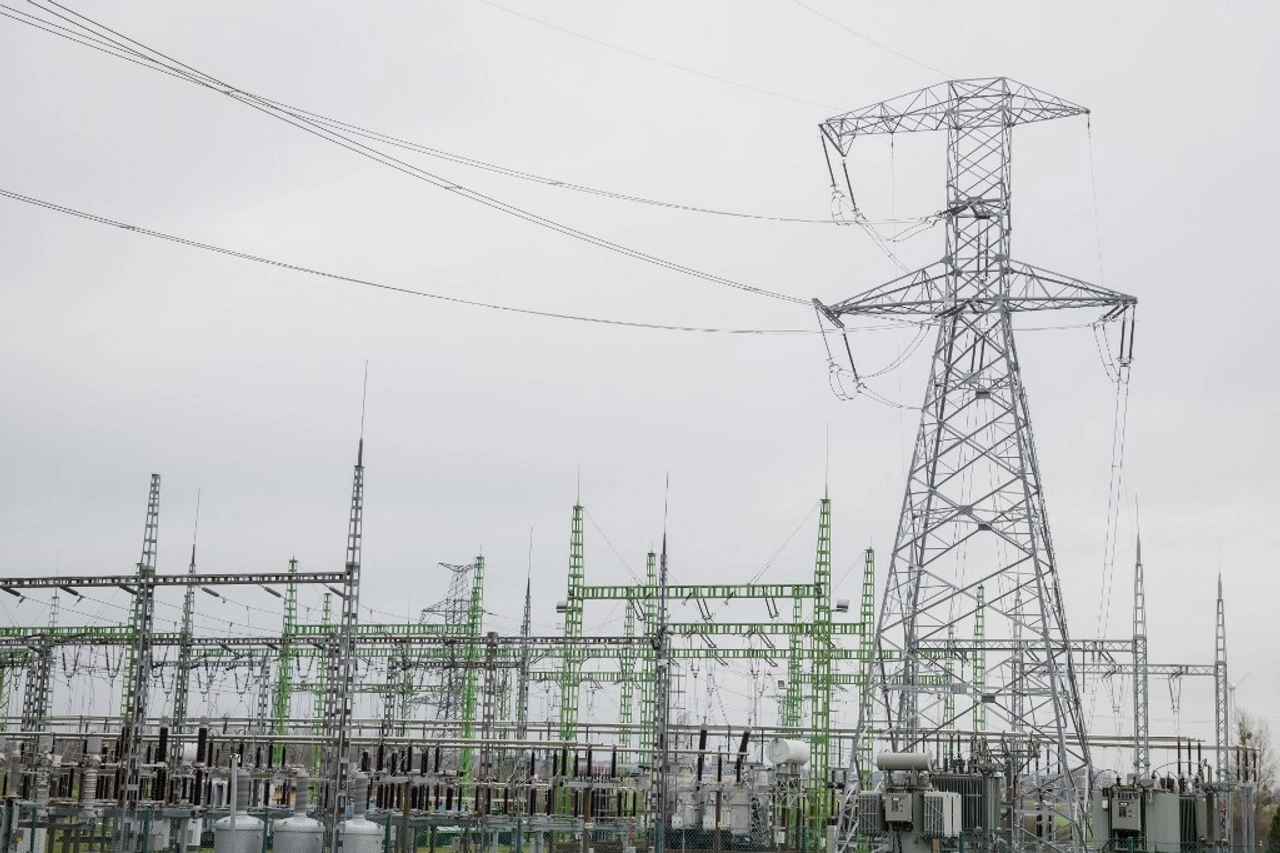
More than thirty years after gaining independence from the Soviet Union, Estonia, Latvia, and Lithuania have initiated the process of disconnecting from Russia’s electricity grid to integrate into the European Union’s network.
This two-day operation commenced on Saturday morning, with residents advised to charge their devices, stock up on food and water, and prepare for potential disruptions akin to severe weather conditions. Many have been instructed to avoid using elevators, and in certain areas, traffic signals will be disabled.
A large, specially designed countdown clock will mark the final moments before the transition during a significant ceremony in Lithuania’s capital on Sunday, which will be attended by EU chief Ursula von der Leyen.
Following this event, the three nations will officially sever ties with the grid that has linked them to Russia since the aftermath of World War II.
‘On high alert’
The Brell power grid—an acronym for Belarus, Russia, Estonia, Latvia, and Lithuania—is predominantly managed by Moscow and has long posed a risk for these former Soviet republics, now members of NATO.
Although none of these countries have sourced electricity from Russia since 2022, their connection to the Brell grid has kept them reliant on Moscow for energy supply. After the disconnection on Saturday morning, the three nations will conduct frequency tests before joining the European grid through Poland on Sunday.
“We are eliminating Russia’s capacity to leverage the electricity system as a means of geopolitical coercion,” stated Lithuania’s Energy Minister Zygimantas Vaiciunas in an interview with AFP.
“This marks the culmination of efforts spanning over a decade or two to diminish that energy reliance,” remarked Prof. David Smith from the Baltic Research Unit at the University of Glasgow in a discussion with the BBC.
“When the Baltic States became part of the EU and NATO, there was widespread acknowledgment of their status as an energy island, still tethered to that shared electricity network with Belarus and Russia,” Smith noted. “That connection has now been entirely severed.”
Tensions between the Baltic States and Russia, which share a border of 543 miles (874 km), have escalated significantly since Russia’s large-scale invasion of Ukraine in February 2022.
In the aftermath, a series of suspected sabotage incidents involving undersea electricity cables and pipelines in the Baltic Sea have raised concerns that Moscow might retaliate against the Baltic States’ shift towards European Union energy sources.
Over the past 18 months, at least 11 undersea cables have suffered damage. Recently, a vessel from Russia’s “shadow fleet” of oil tankers was implicated in the damage to Estonia’s primary power connection in the Gulf of Finland. The Kremlin has refrained from commenting on these allegations.
While NATO has not directly blamed Russia, it has initiated a new patrol operation in the area called Baltic Sentry. Latvian President Edgars Rinkēvičs stated on Wednesday, “We cannot dismiss the possibility of provocation. Therefore, both Latvian and international security agencies are on high alert.” Latvian Prime Minister Evika Silina added, “We are acutely aware of the risks, but they have been identified, and we have a contingency plan in place.”
In terms of cybersecurity, a representative from the NATO Energy Security Centre of Excellence informed the BBC that there have been numerous emergency operation drills conducted recently to prepare for potential targeted attacks on energy infrastructure.
Gert Auvaart, head of Estonia’s Cybersecurity Centre, indicated to the BBC that Russia “might seek to take advantage of this period to sow uncertainty.” However, he emphasized that thanks to international collaboration, Estonia is “well-prepared for even the most challenging scenarios.” He noted a significant increase in cyber-attacks against Estonia since Russia’s invasion, which have ranged from “hacktivist-driven DDoS attacks to more advanced, targeted operations aimed at government entities and businesses.”
The Baltic States are also vigilant against disinformation campaigns associated with this energy transition. Following their announcement to Russia regarding their withdrawal from Brell in August 2024, social media campaigns began circulating misleading warnings about potential supply disruptions and escalating prices should the countries exit the joint power grid.