

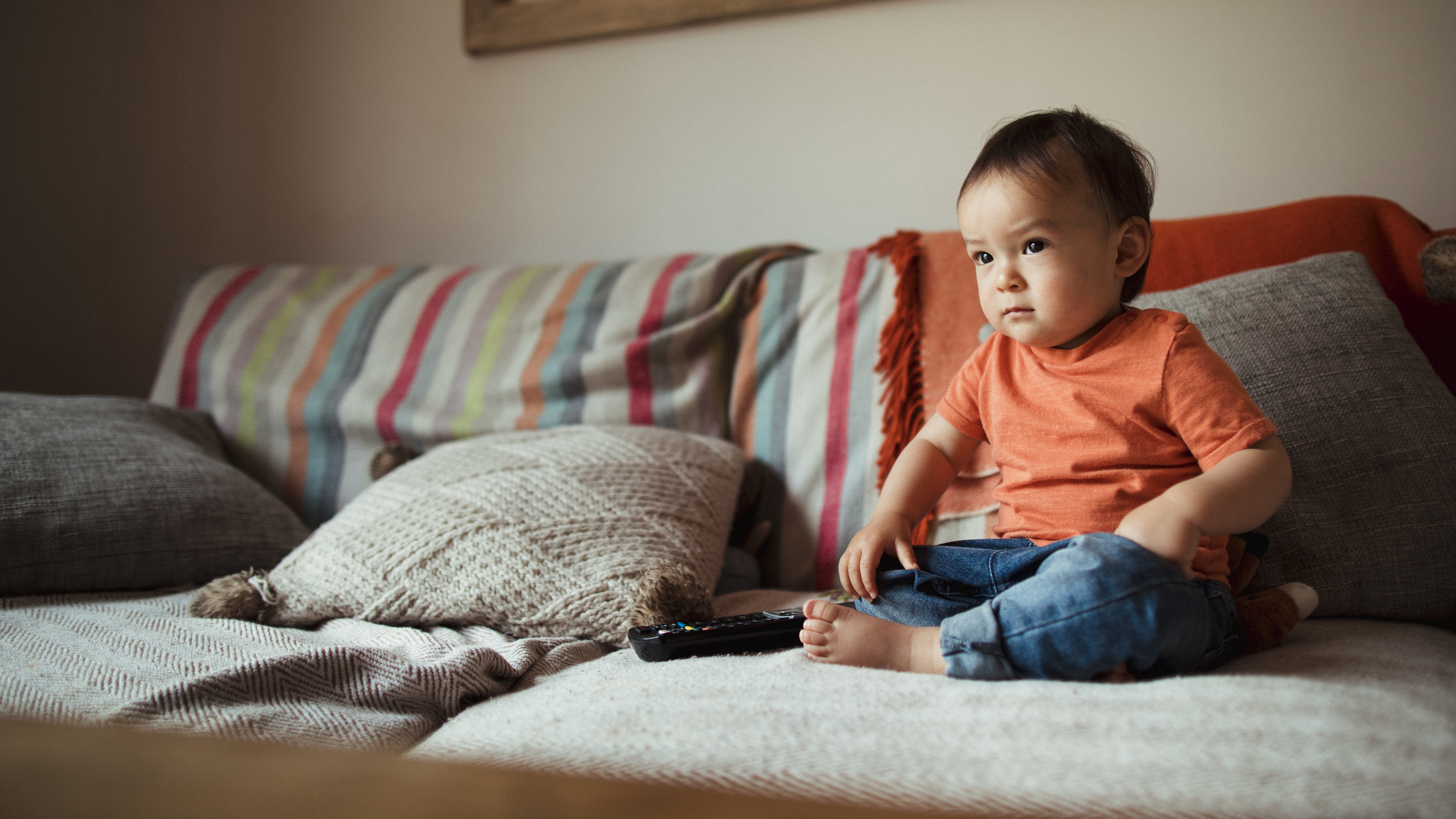

In an ideal world, parents wouldn’t rely on screen time to entertain young children. We all know this, but we all need a break sometimes.
Faced with long working hours where two parents must cover the cost of living and the shrinking ‘village’ of closed public services, many families reach for the TV remote or tablet as a coping mechanism. Thank God for The Wiggles, I say.
Now, new government guidance details exactly how long we can get away with letting our kids watch the telly, with advice on how to do so with minimum impact to their development.
Children under the age of five should be limited to one hour of screen time a day, the guidance states.
And if you’re going to allow a little one under two to zombie out with Bluey, there’s one rule you should follow: don’t leave them ‘alone’.
The guidance says under-twos should have as little screen time as possible, and any screen time they do have should take the form of a family activity that encourages conversation.
‘Try watching and discussing content together with your child as it supports their development and helps you protect them from harmful content,’ the new Better Start in Life website states.
It makes a lot of sense, but won’t be popular among stretched parents who use screens while working from home while fighting the onslaught of nursery illnesses.
For the screen time that two to five-year-olds do have, families are also advised to avoid fast-paced social media-style videos and toys, or tools that use AI.
Mealtimes should be screen-free, with families advised to try background music, table games and colouring to keep distractible children in their high chairs.
Unsurprisingly, screens before bed are not recommended, with parents reminded of the power of a traditional bedtime story.
‘90% of brain growth happens before age 5,’ the website states. ‘Young children learn best through warm, responsive interactions with parents and carers.’
Prime Minister Sir Keir Starmer suggested the guidance is designed to help parents, not tell us off. He vowed that mums and dads will not be left ‘to face this battle alone.’
‘Parenting in a digital world can feel relentless. Screens are everywhere, and the advice is often conflicting,’ he said.
‘There will be some who will oppose us doing this. But whether it’s navigating technology, tackling the cost of living or balancing the demands of family life, I will always stand on the side of parents doing their best for their children.’
It comes as the UK is also considering Australia-style measures to limit or ban social media for under-16s.
Around 98% of children are watching screens on a daily basis by the age of two, the government has previously said, and those with the highest screen time see an impact on their language.
The guidance was developed by a panel led by children’s commissioner Dame Rachel de Souza and children’s health expert Professor Russell Viner.
Long periods of time spent on screens alone impacts activities key for good development such as sleep, physical activity, creative play and interaction with parents, they said.
We banned our kids from screens

Ruby Blaken, 32, and her husband Mike, 35, from Wiltshire, previously spoke to Metro about banning screen time for their children, then ages
8, 4 and 2.
That involved locking the iPads and game consoles away and only allowing occasional family TV-time, as a special treat.
‘We started to see them picking up screens more often and not wanting to do other things. Then we noticed their behaviour became bad when they had been on them and there were constant arguments between themselves – it’s like they forgot how to play with each other!’ Ruby said.
‘Initially, we tried by restricting it, but this just resulted in being asked about it all the time.
‘So we chose to just stop screen time altogether. The bigger two were obviously quite annoyed to start with, but actually have very quickly found other things to do.
‘We have been really surprised by how easily they have picked up other things that they hadn’t done in a long time. We do still get questioned on it sometimes, but they know we just aren’t having it for the time being.’
However, limits on screen time should not be applied in the same way for children with special educational needs and disabilities (Send) using screen-based assistive technologies.
Education Secretary Bridget Phillipson added: ‘I know how hard it is to navigate parenting in a world full of screens. They’re unavoidable, but it often feels impossible to tell whether you’re getting the balance right.
‘That’s why we’re giving parents the clear, trusted support they’ve asked for – so families can make informed choices, and children can have the childhood they deserve.’