
FRANKFURT — An extended war in the Middle East will force the European Central Bank to choose between protecting growth and combating inflation, policymakers warned on Thursday.
Since Israel and the United States started bombing Iran last weekend, crude oil prices have risen by more than 10 percent and natural gas prices by some 60 percent, in a painful echo of what happened four years ago when Russia invaded Ukraine.
Rising energy prices threaten to drain household finances and raise costs for businesses. That, in turn, would hurt growth and — all other things being equal — lead the ECB to cut interest rates to help cushion the economy.
At the same time, higher fuel and energy prices threaten to push up inflation in the near future, making it hard for the ECB to cut rates without undermining its credibility and causing a broader loss of confidence in the euro.
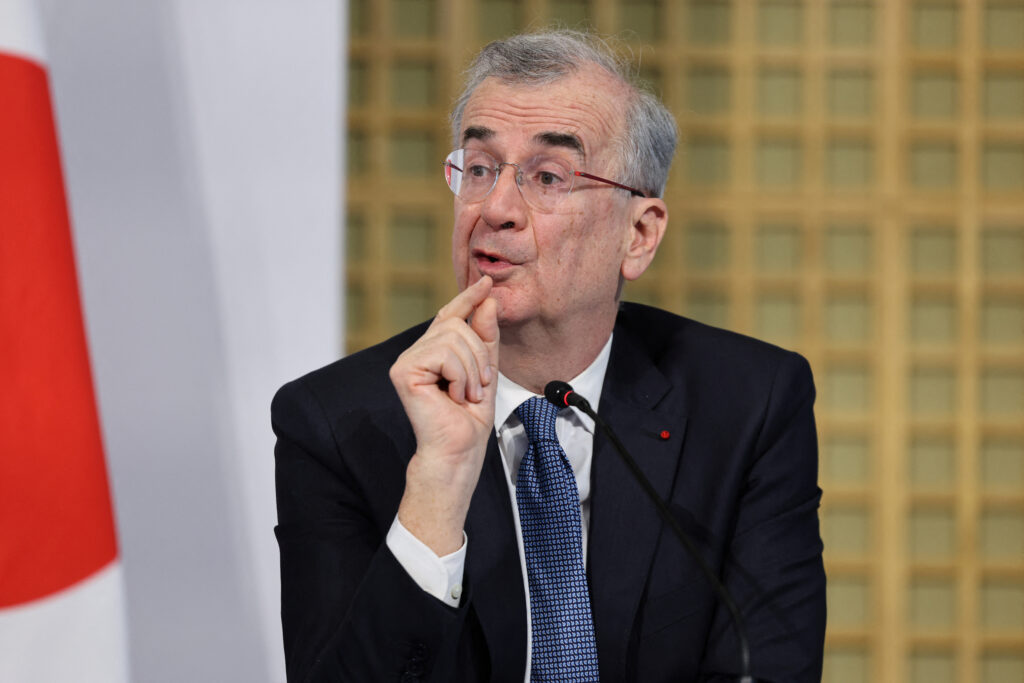
“Everything will depend on how long the war lasts,” Nagel’s French counterpart François Villeroy de Galhau told France Inter radio on Thursday. He added that “the current shock could lead to a little more inflation and a little less growth, but the mix depends on how long the phenomenon lasts.”
After Russia’s invasion of Ukraine in February 2022, the ECB was accused of raising interest rates too late — only in the summer of that year — as prices rose. Inflation subsequently peaked at over 10 percent, a jump that’s still fresh in the minds of central bankers.
“We are very vigilant in this regard, as a result,” Deutsche Bundesbank President Joachim Nagel told reporters on Thursday. “I am confident that we will react robustly, should it be necessary.”
However, Villeroy stressed, “2026 is not 2022,” arguing that four years ago an energy shock amplified inflation pressures that had already been building due to the disruption of global supply chains during the pandemic.
The French governor, an influential voice on the ECB’s policymaking Governing Council, said he saw “no reason” for the ECB to raise interest rates today. The Council will take a holistic approach to setting policy when it meets later this month, he said, rather than focusing on the narrow impact of energy prices.
Rate hike seen as likely
Current judgments remain subject to crippling uncertainty. On the one hand, the defiant response of Iran’s rulers to the attacks and the inherent limitations of air strike campaigns suggest the conflict will drag on. On the other hand, U.S. President Donald Trump told POLITICO on Wednesday that Iran was already running out of weapons to carry on the fight. U.S. Central Command said missile launches by Tehran were down 86 percent from the first day of the conflict, while drone launches were down by nearly three-quarters.
“The baseline [is] that this is going to be short-lived,” ECB Vice President Luis de Guindos said at the Institute of International Finance event in Brussels, although he warned that expectations of inflation — which tend to become self-fulfilling — will change if the war drags on.

But Bank of Finland Governor Olli Rehn damped any optimism about the prospects of a quick end to hostilities at the same conference, especially as the conflict has now escalated to engulf the whole region, from Cyprus and Azerbaijan to Oman.
Financial markets are betting that the ECB will, if anything, err on the side of not repeating the mistake it made in 2022. Interest rate futures now suggest an ECB rate hike this year is more likely than not, while at the end of last week they had not expected any action in 2025.
“The ECB will be mindful” of its mistakes in recent years, “and there is a set of oil and gas prices that would push it into a response,” J.P. Morgan analyst Greg Fuzesi wrote in a note to clients on Wednesday. “However, those prices would likely need to be much higher than they are today. If prices stay relatively close to current levels, we would still see the ECB as quite firmly on hold, especially because the supply shock on energy also implies some hit to growth.”
This article has been updated to include other comments from central bankers.