

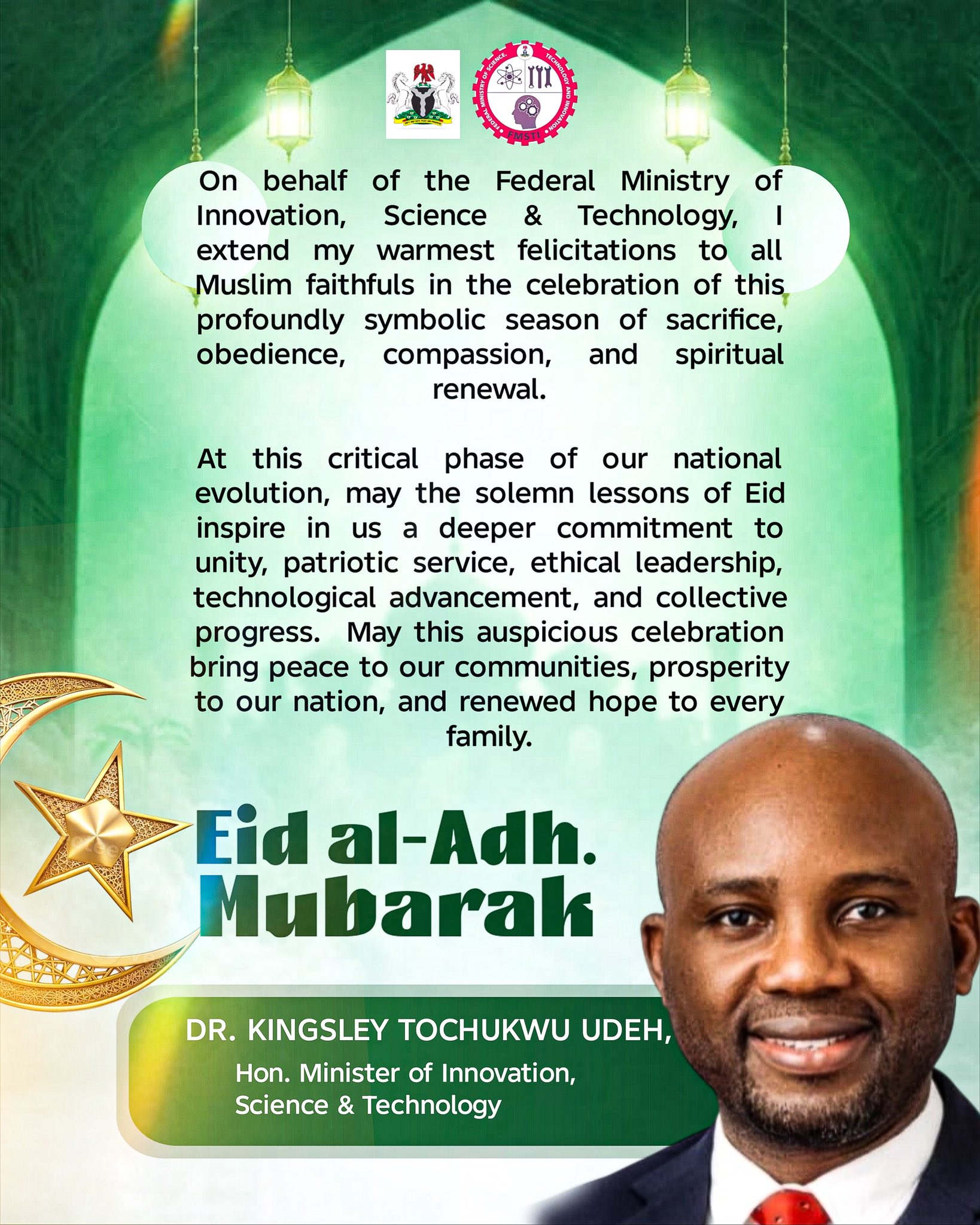
FMIST Minister, Dr. Kingsley Udeh, has called on Nigerians to embrace sacrifice, compassion, and unity as Muslims across the country celebrate Eid-el-Kabir.
Udeh made the appeal in a goodwill message, noting that the festive period presents an opportunity for reflection on national values and collective responsibility.
Eid-el-Kabir Preaches Compassion – Udeh
The Eid-el-Kabir message from Udeh emphasised the spiritual and moral lessons of the Islamic festival, particularly the importance of selflessness and care for the less privileged.
Udeh urged citizens to use the occasion to strengthen bonds of unity across religious and ethnic divides, stressing that Nigeria’s diversity should be a source of strength rather than division.
He further encouraged Nigerians to extend support to vulnerable groups, including widows, orphans, and displaced persons, during the celebration period.
Eid-el-Kabir Symbolises Sacrifice and Obedience
Eid-el-Kabir, also known as Eid al-Adha, commemorates the willingness of Prophet Ibrahim to sacrifice his son as an act of obedience to God.
The festival is marked in Nigeria and across the Muslim world with prayers, charitable giving, and the slaughter of animals, with meat shared among family members, neighbours, and those in need.
Udeh noted that these traditions reflect the values of generosity, compassion, and social responsibility that Nigerians should emulate beyond the festive season.
Call for National Unity And Peace
The NPC commissioner stressed that Nigeria is currently facing social and economic challenges that require collective sacrifice and understanding from all citizens.
He urged Nigerians to remain committed to peace and coexistence, regardless of religious or ethnic differences, adding that unity remains essential for national progress.
According to him, the lessons of Eid-el-Kabir should inspire leaders and citizens alike to prioritise the common good over personal interests.
Compassion for the Less Privileged
Udeh also called on Nigerians to extend kindness to the less privileged during the festive period, noting that many families are facing economic hardship.
He encouraged acts of charity such as food donations, financial support, and community outreach as practical expressions of compassion during Eid celebrations.
The Eid-el-Kabir message aligns with broader national appeals for empathy and social support during festive periods.
Religious Leaders Promote Shared Values
Religious and civic leaders across Nigeria have continued to emphasise the importance of sacrifice, compassion, and unity during Eid-el-Kabir celebrations.
Similar messages have been echoed by government officials and organisations, urging citizens to reflect on the values of obedience, generosity, and faith that define the festival.
These calls aim to strengthen national cohesion and encourage peaceful coexistence among Nigeria’s diverse population.
Conclusion
Chief Okechukwu Udeh’s Eid-el-Kabir message highlights the enduring importance of sacrifice and compassion in building a more united society.
His appeal reinforces the need for Nigerians to show empathy, support vulnerable groups, and uphold values that promote peace and national development.