

FRANKFURT — The threat of war has a way of changing people’s minds — even euro holdouts.
Sweden’s ruling class is flirting with the idea of adopting the EU’s single currency, seeking safety in numbers to insulate itself against geopolitical tension from both sides of the Atlantic.
Giving up its own currency would go against decades of Swedish thinking vis-a-vis Europe, which has held that national control of the krona is a vital policy tool for managing the economy.
Sweden never secured a formal opt-out from monetary union like its Danish neighbors, but a 2003 referendum, which showed a clear majority against joining, has meant that neither Brussels nor Frankfurt has ever pressed the issue.
But just as Russia’s war in Ukraine prompted the traditionally neutral Sweden to join NATO, U.S. President Donald Trump’s erratic trade policies are changing the conversation around monetary sovereignty.
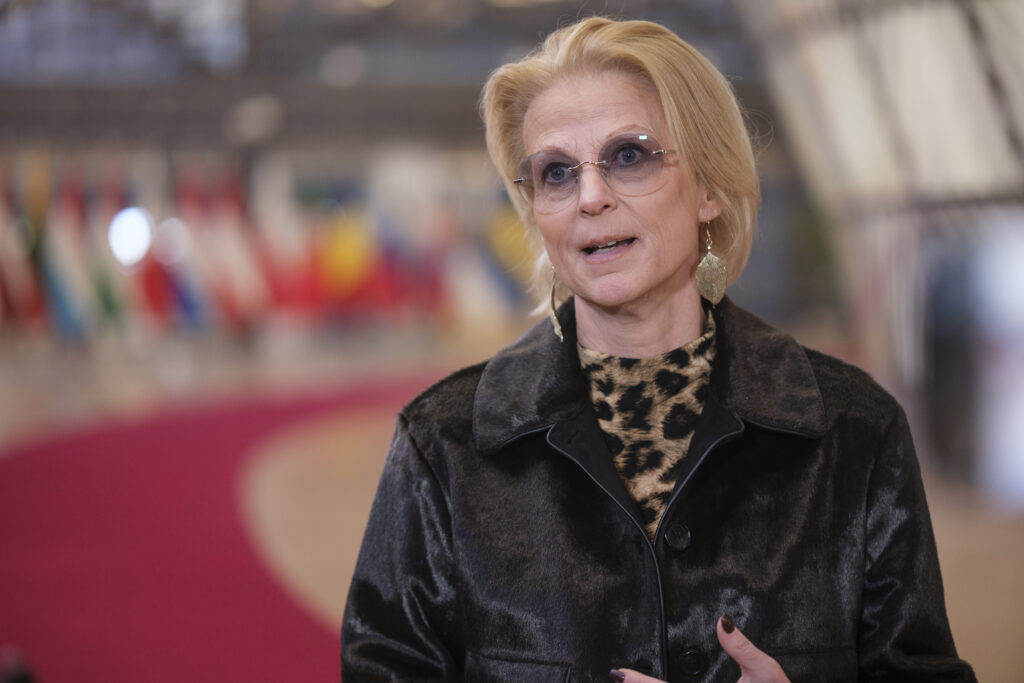
Finance Minister Elisabeth Svantesson on Tuesday told the country’s parliament that her Moderate Party would set up an expert panel to weigh the pros and cons of joining the euro — if the party remains in power after September’s parliamentary election.
“Policymakers may worry that in a severe crisis — such as a military escalation in the Baltic region or some major turbulence elsewhere in the world — the krona could depreciate very rapidly with severe repercussions for the economy,” EFG Bank’s chief economist Stefan Gerlach told POLITICO.
The krona lost more than 20 percent of its value against the euro over the last decade before recovering somewhat in recent months. A sudden crash in response to geopolitical tensions could force Sweden’s central bank, the Riksbank, to ramp up borrowing costs to prevent prices from skyrocketing. And that, in turn, could push Sweden’s economy off a cliff.
The Riksbank said on Thursday after its regular policy meeting that while its overall view of the economic outlook hadn’t changed since December, “Recent developments, for instance in relation to U.S. trade and foreign policy, have widened the range of potential outcomes for what can happen going forward.”
The Swedish economy has been resilient to such uncertainty, it noted, “but sentiment in the household and corporate sectors can deteriorate rapidly.”
Whether such factors are enough to sway Sweden’s position on the euro remains to be seen, Gerlach said, pointing to deep-seated distrust of how the single currency is managed, and to fears of being drawn into future sovereign bailouts.
“Politicians will weigh the risks of having an external crisis against risks of having another eurozone crisis,” said the Swedish economist, who also served as deputy governor at Ireland’s central bank.

Public opinion has remained cautious. A Eurobarometer poll found last year that only 39 percent of Swedes believed the country was ready to adopt the euro. That’s up 7 percentage points from a decade earlier, however, and it could rise further if tensions on the international stage threaten the krona.
Bulgaria’s recent admission into the euroclub leaves Czechia, Hungary, Poland, Romania and Sweden as the last remaining holdouts. Their entry is legally required once they meet and maintain specific economic criteria over a specific period of time. Avoiding those thresholds altogether has been a strategy that countries such as Poland have adopted to keep euro banknotes out of their citizens’ wallets.
“Our economy is doing clearly better than most of those that have the euro,” Poland’s finance minister, Andrzej Domański, told the Financial Times, citing solid growth, low unemployment and rising wages. That argument doesn’t necessarily apply to Sweden, whose economy is much smaller and more vulnerable to global uncertainty.
Then and now
Trump’s ongoing pursuit of Greenland, which is controlled by Sweden’s neighbor and close ally Denmark, may already have shifted public support among Swedes further toward the euro, Swedish economist Lars Calmfors told POLITICO.
Calmfors chaired Sweden’s last expert panel that examined the merits of euro adoption in 1996, three years before the single currency was introduced. But that was 30 years ago. Calmfors published a report in December arguing that today, the benefits of adopting the euro — such as more integrated trade, economic stability and geopolitical alignment — outweigh the costs, even if that means losing an independent monetary policy. The new assessment was driven by both political and economic considerations, he told POLITICO.
Joining the euro would take years, even if a new expert panel were to recommend adoption, Finance Minister Svantesson told parliamentarians on Tuesday. The cautious pitch is necessary to keep the right-wing populist party, Sweden Democrats, onside.
The party’s support is vital for propping up the current minority government, and it’s dead set against euro membership. But in the current fragile environment, it may not take much to prompt a shift in public opinion, according to Gerlach.
“A Russian drone flying into Swedish airspace may be enough,” he said.


