

To mark St Patrick’s Day and the Irish cultural revival that’s sweeping the world, we’re republishing this feature on why you should visit Cork, a city of good food, great craic, and fascinating history.
Choking through the scent of manure, I swallow a swarm of midges as I cycle past a meadow. I’m spluttering and my eyes are streaming, but I’ve never been so glad to be home in Ireland.
Freewheeling down gently rolling hills, I’m rounding out a weekend in Cork, the ‘rebel city’ that’s enjoying a full-throated cultural renaissance.
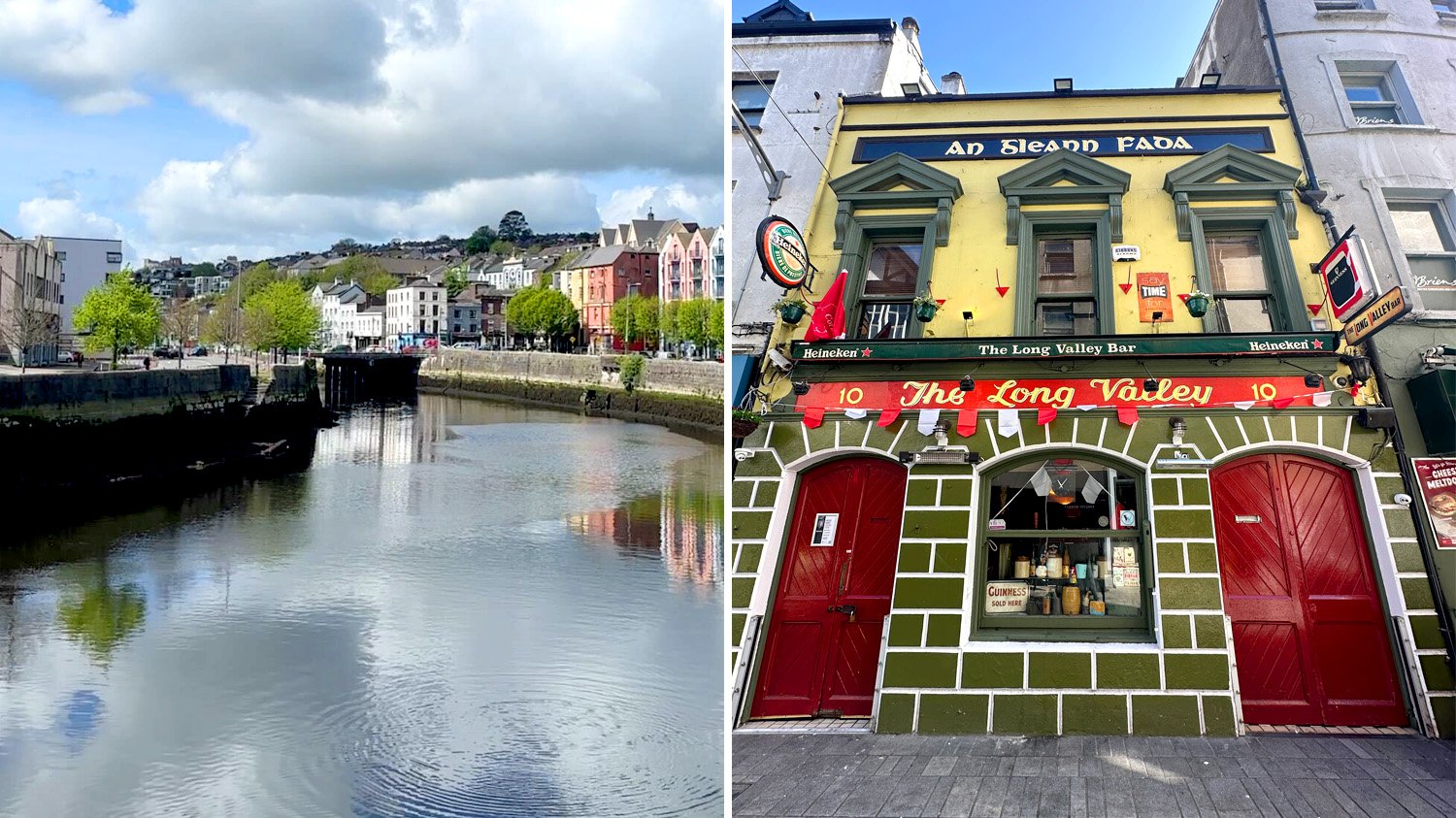
With trendy cafés and pastel-hued townhouses lining the cobbled streets, and jigs and reels drifting from pubs, it has the hallmarks of a major metropolis but the heart (and the craic) of a village.
Rivalry between Dublin and its southern sister runs deep. But even as a proud Dubliner, I have to admit that everything my fair city does, Cork does better.
A warm welcome
I’m less than ten steps outside Kent station when I’m reminded that, like everywhere in Ireland, it’s the people who make the place.
Corkonians speak like a song, in a lilting accent with an undulating rhythm. Welcomes are warm wherever you go, from the bar staff in Sin é to the taxi drivers on George’s Quay.
Win a city break for two in romantic Rome with our newsletter

Unlimited pasta, world-class shopping, thousands of years of history on every street corner… who wouldn’t want to be in Rome?
We’ve teamed up with Wowcher to offer one lucky reader the chance to win a city break for two in Rome, including return flights from your chosen UK airport (Bristol, Edinburgh, Manchester, London Gatwick or London Stansted) and a stay in a four-star hotel walking distance of iconic spots such as the Colosseum and the Trevi Fountain.
Armed with travel tips from our exclusive new newsletter The Getaway Expert, this is your chance to explore the Eternal City like a real Roman. Good luck!
Open to UK (excluding Northern Ireland) residents aged 18 or over. Closes 11:59pm on 29 March 2029. Full T&Cs apply.
Cork was voted Europe’s second friendliest city in 2023, and, more recently, one of the 25 best places in the world — the only Irish inclusion on National Geographic’s prestigious travel bucket list for 2025.
The city is served by a decent transport network, with hourly trains arriving from the capital from 6am until 9pm. Cork Airport, a 15-minute drive from the centre, has direct routes to major European destinations and UK hubs including Manchester, Birmingham and London’s Big Four.
Once you’re there, though, the best way to see it is on foot.
‘Everything is within walking distance and I think that’s what has kept the sense of community so strong,’ says Dave Riordan, a guide with Fab Food Trails.
Nowhere is it stronger than in Myo’s, a riverside café that hosts Irish language meet-ups and does a mean banana bread. I spend well over an hour there, listening to the gossip of na gaeilgeoirí (native Irish speakers).
Benches and chess tables were installed outside this stretch of shops during Covid, and they’re one of the few pandemic relics locals are happy to keep. Each time I pass, strangers are chit-chatting.
Living history
After scoping the area, I drop my bags at The Imperial Hotel, a piece of living history on South Mall where Irish revolutionary hero Michael Collins spent his final night.
With maximalist chandeliers and marble floors, it exudes old-school glamour — but the highlight is room 115, which has been transformed into a luxury suite with a vintage four-poster bed in honour of ‘the Big Fella’ (from €318 per night).
Set in a pedestrianised zone, the hotel is minutes from award-winning attractions: the historic English Market, the contemporary Glucksman gallery, and Nano Nagle Place, a museum and rose garden dedicated to the Cork-born women’s educator.
Further afield but well within walking distance, the Butter Museum is the place to delve into Irish folklore and heritage.
The retro Kerry Gold ads from the 50s and 60s are worth the trip alone, and at £5, entry is a steal.
City of food and fun
Quirky and creative, Cork has always known how to have a good time. On Saturday night, I bounce between trad sessions at O’Sho and Tom Barry’s before ambling to Callanan’s, purveyor of what is said to be the best Beamish in the city.
There are no TVs, no music, and they’d prefer you to put your phone away — a proper Irish pub, though you’d miss a bit of fiddle.
Have you been to Cork?
-
Yes
-
No
It’s in good company. A few doors down is Izz Café, a popular Palestinian restaurant that serves glorious sharing plates and the best maqluba I’ve had outside the West Bank.
The café has just been named Ireland’s best Middle Eastern restaurant, and, according to owner Izzedeen (Izz) Alkarajeh, they make the best hummus in the country. After tasting it, I agree.
The next morning, I thumb through vinyl at plugd records, an independent coffee shop cum wine bar that goes the extra mile for both local and international charities.
After a stroll around Fitzgerald Park, I’m ready to take on the spectacular showcase of Cork cuisine that is a tour with Fab Food Trails (€80pp), which includes stops at Miyazaki, a Japanese takeaway headed by Michelin star chef Takashi Miyazaki, and My Goodness, a vegan deli in the English Market that goes big on fermentation.
Other standouts are Goldie, a narrow restaurant with a menu that changes daily, and Elbow Lane, a nano-brewery and smokehouse that serves butter-soft T-bones and local buffalo burrata. More on that later.
Helping hands
To understand Ireland’s culinary present, you must have a sense of its colonial past.
The island and its microclimate are fertile ground for everything from beef and oysters to butter and cheese. But for centuries, this natural wealth was exported to England, while the Irish went hungry. It’s hard to be creative when your focus is survival.
Hundreds of years were spent bowing to the ‘superior’ food cultures of our European neighbours, yet before the arrival of the potato in the late 16th century, the people of this island foraged for vegetables, fruit and nuts, and ate shellfish, seaweed, and what would now be called organic red meat.
Today, Irish produce is rightfully regarded as some of the highest quality in the world, and kitchens are finally catching up.

‘We’re in an exciting moment where people are doing amazing things with wild food like seaweed, grass, foraged stuff like that, and fusing that with fine dining and concepts from abroad,’ Suzanne Burns, leader of Kinsale Food Tours, explains.
The willingness to experiment is obvious: take Johnny Lynch, who took a punt on turning his family’s generations-old dairy into a buffalo farm.
The Lynches imported 31 water buffalo from Italy to their land in Macroom in 2009, at the height of the global financial crisis.
Today, they have a herd of over 700 and a thriving business that stocks the English Market with everything from mozzarella and ricotta to natural yoghurt.
Then there’s Koko Kinsale, a high-end chocolate shop owned by Frank Keane, who ran Ireland’s leading ceramic gallery until business dried up in the recession. Now, he pours his artistry into intricate, colourful sweets.

Years of work in local tourism have shown Seamus Heaney, director of Visit Cork, how the city and its residents tick.
‘It’s very easy to push open doors here,’ he says. ‘People change careers, or they go abroad for a while, as they always have in Ireland. Eventually, they come back with ideas, and crucially, they come back to find a community willing to help them. There are lots of exciting things happening.’
That ethos extends to many local enterprises, including Cork’s first greenway, which opened in Midleton in December.
Wife and wife Fiona O’Driscoll and Deirdre Roberts, who run Cork Bike Hire, opened a new location in east Cork specifically to cater to the tourists they hope it will attract.
Cycling along this idyllic stretch, I pass a couple who stopped to help an elderly farmer close a wrought-iron gate.
At the end of the day, as Seamus says, Cork is a place where people look out for each other.
Two-day Cork itinerary
Day 1
Coffee and pastries at plugd records.
Tasting tour with Fab Food Trails (€80pp, worth every penny if you can spare it).
Explore Elizabeth Fort, the Glucksman and Nano Nagle’s garden.
Dinner at Elbow Lane followed by Guinness and a trad session at Sin é.
Day 2
Breakfast at Myo’s (try the banana bread).
Cork Butter Museum for a history lesson and butter-making demonstration.
Take the train to Midleton and cycle the newly opened Greenway (€50 per day for an electric bike from Cork Bike Hire). Stop for coffee and a pastry at the Grump Bakers, which 2-Michelin-starred chef Vincent Crepel says does the best sourdough in the area.
OR
Take the bus to Kinsale and go on a walking food tour with Kinsale Food Tours (from €75pp).
Dinner at Izz Cafe followed by a pint of Beamish at Callanan’s.
Alice Murphy was a guest of Fáilte Ireland.
This article was originally published on June 6, 2025, and has been updated to reflect the closure of the Franciscan Well brewery.