
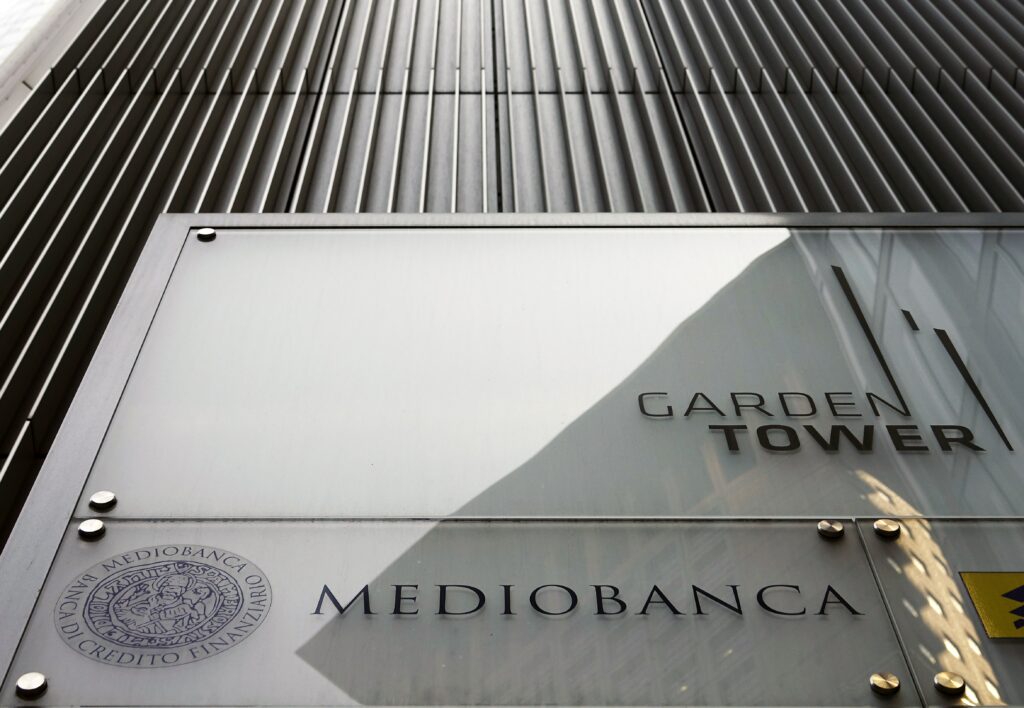
BRUSSELS — When Mediobanca, Italy’s most revered investment bank, became the target of a takeover effort backed by several Rome-allied billionaires, it rushed its senior executives to Brussels to plead its case.
The typically activist European Commission had seemed a good venue to raise a stink about a highly politicized banking merger that Mediobanca said was a clear conflict of interest.
But after a strenuous lobbying campaign, even the EU’s powerful executive proved too slow to help the lender — leaving it with dwindling options for survival ahead of a hugely controversial tie-up that has highlighted the Italian government’s increasing sway over the country’s banking sector.
Mediobanca, a consummate dealmaker on the Milan financial scene since 1946, has been struggling since January to ward off a hostile €16.6 billion bid by Monte dei Paschi di Siena (MPS), the ancient Tuscan lender that was largely controlled by Rome until last year.
The move had come amid a wider banking battle in Italy involving a complex back-and-forth of bids, counter-bids and financial brinksmanship as lenders, oligarchs and government officials jostled to exert influence over smaller targets while fending off opponents and predators.
It also coincided with a tendency among European governments to intervene in domestic banking sectors, putting national leaders at odds with EU technocrats pushing for a united European financial system.
The Italian government of Prime Minister Giorgia Meloni had hoped to transform MPS — finally back to profitability after years of stagnation and corruption scandals — into a “third pole” of Italian banking to challenge industry giants Intesa Sanpaolo and UniCredit. Officials complain that those large banks have failed to use their bumper profits to increase credit provision for small businesses.
But when an earlier effort to fuse MPS with Milanese bank Banco BPM was derailed by a hostile takeover attempt by UniCredit, Monte dei Paschi CEO Luigi Lovaglio turned to Mediobanca.
Despite the unlikely fit, Italian officials saw the proposal as a means to revive the dream of MPS as a third pole. No less eager were Rome construction tycoon Francesco Gaetano Caltagirone and the billionaire Del Vecchio family, government-allied investors with stakes in both banks who were unhappy with Mediobanca’s stewardship of its largest investment, Generali, Italy’s largest insurer.
As usual in Italy, there was also an interpersonal aspect to the feud: Mediobanca CEO Alberto Nagel and the Del Vecchios have been at odds ever since Nagel blocked a €500 million healthcare investment proposed by the family’s late patriarch Leonardo.
Naturally, the confluence of interests behind the MPS bid sowed suspicion. In short order, Mediobanca embarked on a hearts-and-minds campaign in Brussels to make its case to journalists and bureaucrats that Rome was violating EU rules.
Over the previous years, Rome had steadily offloaded its stake in MPS — which was bailed out in 2017 — under strict EU supervision to avoid conflicts of interest.
But Mediobanca insisted to the Commission that its rival had not fully disentangled itself from its political sponsors, pointing to a Financial Times report suggesting the sale of the Monte dei Paschi stake had been gamed by the government, as well as the presence of government appointees and allies such as CEO Lovaglio and Caltagirone’s son, Alessandro, on its board. It also pointed to the fact that MPS was bankrolling its takeover attempt in part with funds from a 2022 capital raise largely financed by the finance ministry.

Details like these, it argued, made it clear that Rome was still influencing the bank as it pursued a takeover, in violation of state aid rules.
Separately, it dispatched executives to Frankfurt, warning the European Central Bank that Caltagirone and Delfin, the holding company of the Del Vecchios’ late patriarch, were working in ‘concert’ to influence Mediobanca — without disclosing their interest in line with regulatory requirements.
Executives may have been hoping that the Commission would respond with a formal inquiry and tank Monte dei Paschi’s share price.
But instead, it looks increasingly likely that the EU executive will either swoop in too late, give up, or come up empty-handed, clearing the path for Rome and its allies to get their way — as was the case for the Commission’s hotly anticipated investigation into the government’s efforts to curtail an earlier takeover bid by UniCredit.
Indeed, despite Commission investigations into Rome’s potential conflicts of interest beginning as early as May, as first reported by POLITICO Pro, the executive has so far only carried out a limited, informal probe into the matter, according to three people who have followed the investigators’ work who spoke on condition of anonymity. That makes it exceedingly unlikely that it will have any impact on the takeover bid before the September deadline.
Such a slow pace is to be expected in a highly complex investigation and doesn’t indicate a lack of interest. Still, the EU executive has appeared unusually half-hearted in its information-gathering, two of the people said. For example, its main interaction with the Italian finance ministry, they said, was to send finance ministry officials what appeared to be a direct copy-paste of the exact same PowerPoint slides sent previously to the Commission by Mediobanca.
The Italian government responded with boilerplate answers it had already provided the Commission months earlier when the transaction first took place, and the Commission hasn’t yet raised the issue again, said one person close to the matter. “Pure bureaucracy,” the person said.
The EU’s competition authority only confirmed that it had “received information from market participants regarding Italy’s sale of a stake in MPS” and was “looking at the information according to our standard procedures.” The European Central Bank has already authorized the takeover.
Spokespeople for the ECB, Monte dei Paschi, Mediobanca and the Ministry of Economy and Finance declined to comment.
Last-ditch efforts
Other efforts by Mediobanca to contain Monte dei Paschi’s advance have either gone awry or are looking increasingly hopeless.
An inventive attempt to stave it off by selling its stake in Italian insurance giant Generali and using the proceeds to take over its banking arm — thus, theoretically, killing the main incentive for a takeover — collapsed last month, after investors largely voted against it or abstained.
For Mediobanca, hope for an 11th-hour turnaround is largely riding on a separate investigation by Milanese prosecutors into the allegations that the Italian government rigged the sale of the stake in Monte dei Paschi.
Earlier this year, authorities raided the offices of investment bank Banca Akros, which facilitated the sale, and onlookers in the financial capital are nervously awaiting the investigators’ conclusions.

Last week, apprehension around the probe morphed into excitement when an Italian financial blogger suggested the prosecutors were set to indict two top government officials for pressuring Mediobanca investors to toe the government’s line.
But that, too, quickly fizzled out: In a rare public statement, Milan’s chief public prosecutor, Marcello Viola, denied the claims.
Perhaps the banking stalwart’s last realistic hope for independence is that investors simply change their mind about the takeover before the September deadline, or that its share price becomes too expensive for Monte dei Paschi.
However, insiders say the perception of government backing — however strongly denied by Rome — has given the bid an unstoppable momentum, particularly among Italian shareholders. The bank’s board is now trying to win over international holdouts, voting on Tuesday to add an additional €750 million to the takeover offer.
With little hope of aid from Brussels, it’s almost certain that Mediobanca, at least in its current form, is not long for a banking scene increasingly dominated by the influence of Rome and its powerful local allies.
“If you want to do a deal in Italy, you need the government on your side,” said one insider. “Why fight City Hall?”
Francesca Micheletti contributed to this report.