

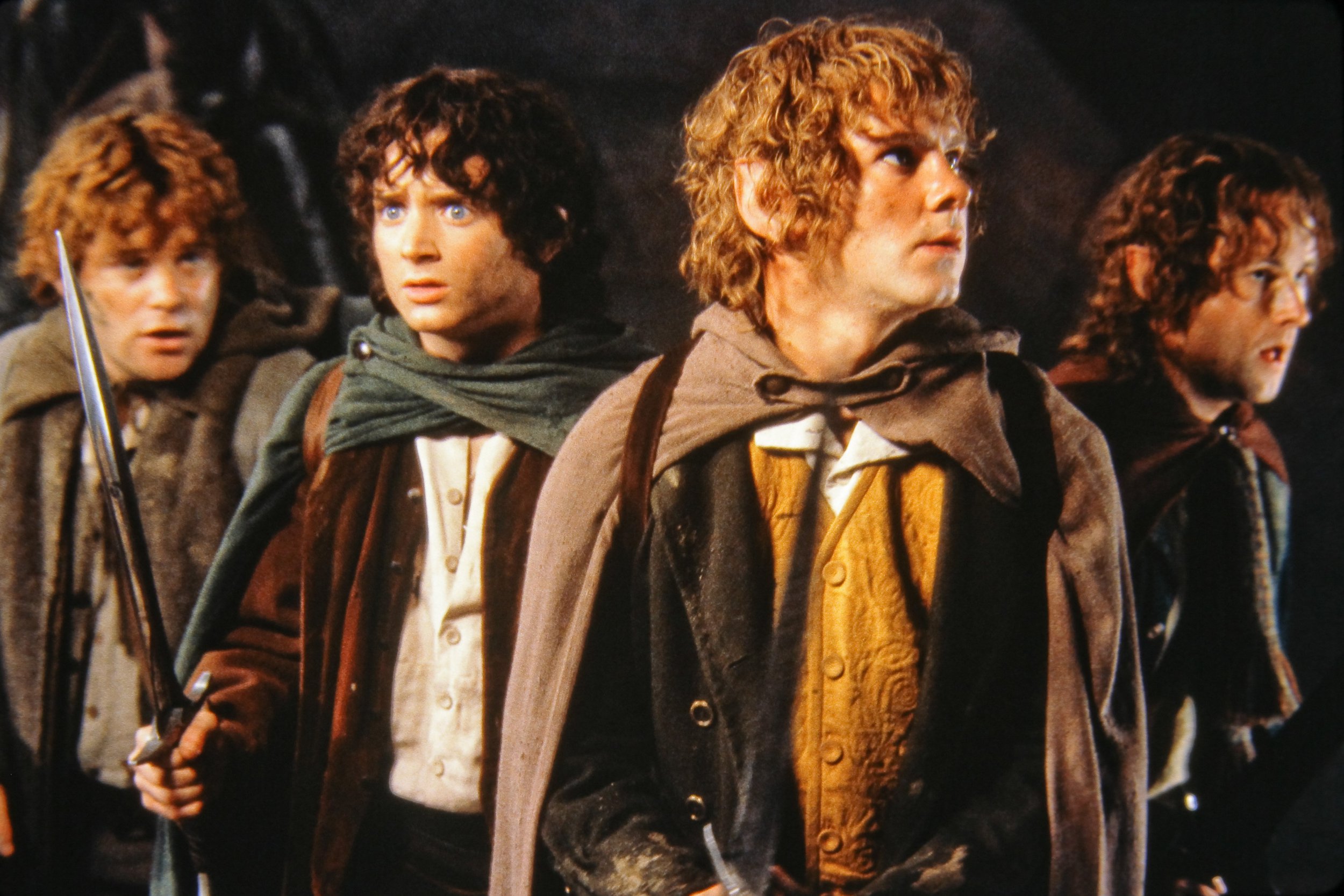
For a series built on endings, The Lord of the Rings has proved remarkably resistant to staying finished.
Now, just over two decades after The Lord of the Rings: The Return of the King drew a definitive line under Frodo’s journey, Middle-earth is being reopened once again – this time by an unlikely new writer: Stephen Colbert.
The host of The Late Show with Stephen Colbert, who steps down in May amid political controversy, has lined up his next gig as co-writer of a new film titled The Lord of the Rings: Shadow of the Past.
The project, announced by director of the original trilogy, Peter Jackson, in a surprise social media video featuring Colbert, will reunite key creative forces from the original trilogy, with Philippa Boyens and Peter McGee also attached.
Set 14 years after Frodo’s departure from Middle-earth, the story will follow Sam, Merry, and Pippin as they retrace the steps of their original journey, while Sam’s daughter Elanor uncovers a ‘buried secret that suggests the War of the Ring was almost lost before it began.’
For Colbert, a famously obsessive fan of J. R. R. Tolkien, the idea emerged from revisiting the early chapters of The Fellowship of the Ring that were never included in Jackson’s original films.

‘You know what the books mean to me and what your films mean to me,’ Colbert told Jackson in the announcement video. ‘But the thing I found myself reading over and over again were the six chapters early on that y’all never developed.’
He described the project as an attempt to remain ‘completely faithful to the books while also being completely faithful to the movies’ – a balancing act that has undone nearly every Tolkien adaptation since 2003.
Because if there is one thing more enduring than The Lord of the Rings itself, it is fans’ suspicion of anyone who tries to add to it.
Online reaction to the announcement has been swift, visceral, and, in many cases, outright hostile.

On Reddit, one fan wrote: ‘Please tell me they aren’t actually doing a sequel to ROTK. No way WB is that desperate, right?’ Another called the idea ‘an absolute disaster’, while others pleaded: ‘Let this series go, you can’t milk Lord of the Rings forever.’
Over on X, the tone was even less forgiving. ‘This is almost sacrilege against Tolkien’s work,’ one user wrote. ‘He deliberately abandoned doing a sequel story because the story was told.’
It is a familiar refrain. In recent years, Middle-earth has quietly become one of Hollywood’s most contested battlegrounds, as studios attempt to extend a story that many believe was never meant to be extended.


Amazon Prime series The Lord of the Rings: The Rings of Power has divided audiences since its debut, while The Lord of the Rings: The War of the Rohirrim failed to win over critics.
Even the upcoming The Lord of the Rings: The Hunt for Gollum, directed by Andy Serkis, has been met with cautious, if not weary, anticipation.
The fear among fans is not just that these projects will be bad, but that they will slowly erode what made the original trilogy feel so singular in the first place.
‘I never thought I would say that someday but I miss the time when the original trilogy was all we had,’ one commenter wrote.
And yet, not all responses have been cynical. Among the backlash, there is a quieter thread of cautious optimism – much of it rooted in Colbert himself.

‘Colbert is definitely one of those people I’d trust to give a s**t about LOTR,’ one fan wrote. Another added: ‘He’s one of the biggest Tolkien nerds out there… I’d trust him more than most.’
That tension between exhaustion and hope is the thread that runs through the experience of the modern LOTR fan. Because while many feel Middle-earth has already been stretched too thin (like butter spread over too much bread, Gandalf), others argue that Tolkien himself left the door open.
In a 1951 letter, he described his legendarium as something deliberately incomplete: ‘The cycles should be linked to a majestic whole, and yet leave scope for other minds and hands, wielding paint and music and drama.’
For some, that quote is a ready defence for more and more adaptations. ‘Tolkien portrayed his literary project as the transmission of long-lost myths,’ Ben Campbell, head of English at Epsom College, told Metro. ‘In that way, I think it is only fitting that modern skalds take on the legendarium and continue to adapt and extend it.’
Alex Johnson, who has loved Tolkien’s world since childhood, is hopeful. ‘The Hobbit felt like a betrayal, the Amazon TV show like a half-hearted fan fic,’ she said. ‘But I do trust Colbert more than most writers, because he genuinely loves the world.’
Others remain deeply sceptical. ‘As a lifelong LOTR fan, I’ve been sickened by the endless cash grabs,’ said theatre artist Antonio Ribeiro with obvious exasperation. ‘It’s diluting the universe. Though Colbert is a passionate fan, so maybe this will be the exception.’
Whether Colbert – fan, comedian, and now unlikely custodian of Middle-earth – can offer fans something as true to the books as Jackson managed remains to be seen.
But one thing is certain: the journey there will be watched closely by millions of fans who take any extension of Tolkien’s universe very, very personally. No pressure.
Got a story?
If you’ve got a celebrity story, video or pictures get in touch with the Metro.co.uk entertainment team by emailing us celebtips@metro.co.uk, calling 020 3615 2145 or by visiting our Submit Stuff page – we’d love to hear from you.