

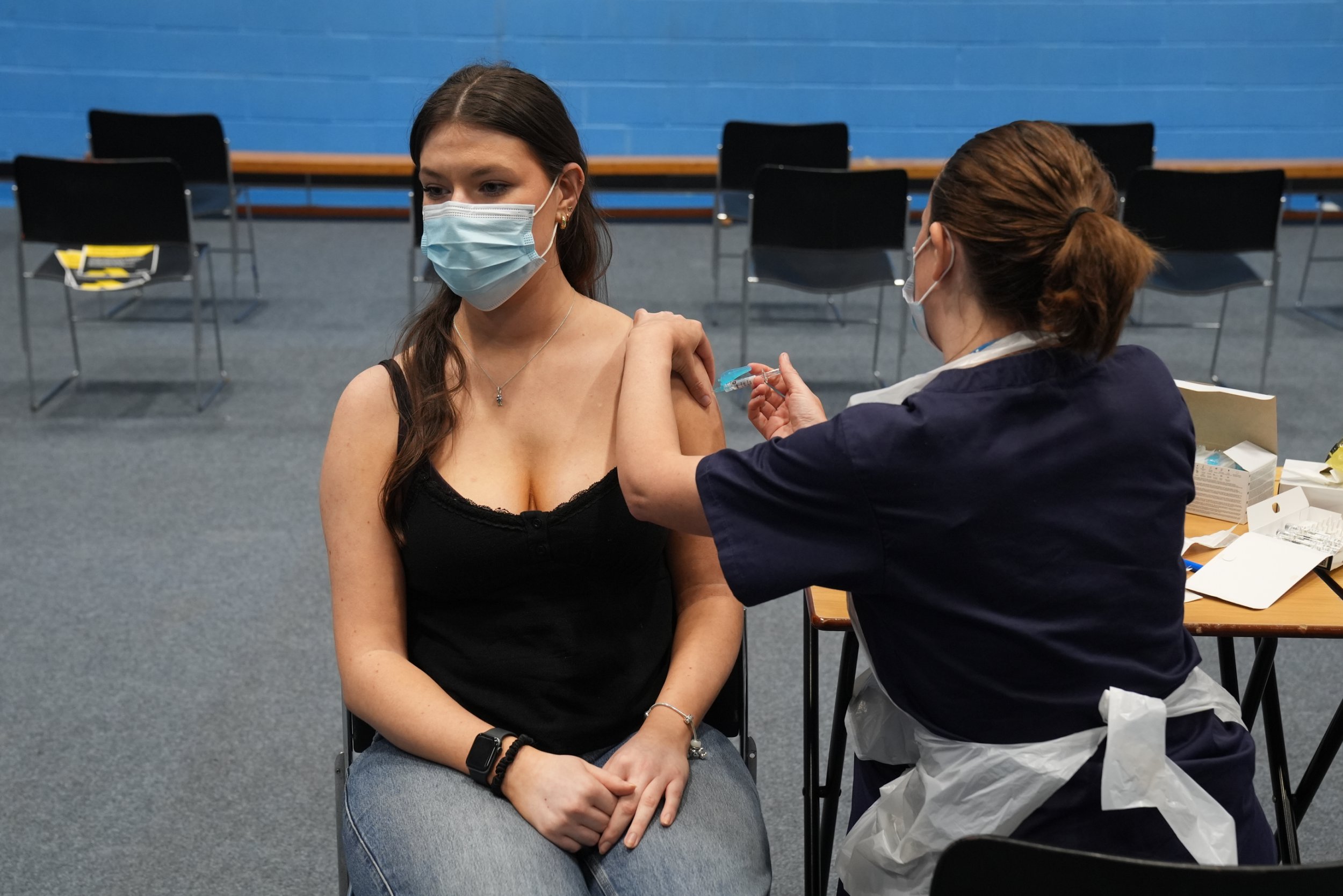
Cases of the rare but deadly meningitis will continue to rise amid an outbreak in Kent, a top health official has said.
The chief scientific officer of the UK Health Security Agency confirmed there have been 20 cases since early March.
Professor Robin May told BBC Breakfast this morning: ‘I would say in outbreaks like this, you would typically expect a small increase in numbers still to go, so I suspect that number will go up slightly.’
Metro spoke with nearly a dozen health experts yesterday who said the outbreak will continue to creep, it will likely be contained within Kent.
Cases outside the Kent area may not be related to the outbreak; meningitis-causing bacteria already exist across the UK.
Sign up for all of the latest stories
Start your day informed with Metro’s News Updates newsletter or get Breaking News alerts the moment it happens.
Professor May added that the outbreak is tied to Club Chemistry, a nightclub popular with local university and college students in Canterbury.

He said the abrupt batch of cases is ‘unusual’ compared to past outbreaks.
‘So, typically, you would expect to see sporadic cases of meningitis, typically individual patients,’ Professor May said.
‘Most days, actually, we would see one in the UK. This is obviously a much larger number.
‘What is particularly remarkable about this case, and unexpected about this case, is the large number of cases all originating from what seems to be a single event.
‘There are two possible reasons for that. One is that there might be something about the kind of behaviours that individual people are doing.’
He added: ‘The other possibility is the bacteria itself may have evolved to be better at transmitting.’
Six of the 20 cases of meningitis have been confirmed to be group B’ meningococcal disease, also called MenB.
B is one of the most common strains of the bacteria that cause meningococcal disease alongside C.
The disease often presents as meningitis, an inflammation of the brain and spinal membranes, and as septicemia, an infection in the bloodstream.
Symptoms of meningitis include a fever, headache, aches and pains, shivering, vomiting and cold hands and feet.
Meningococcal disease symptoms, often shrugged off as a cold or a Fresher’s flu by young people, can spiral into a blotchy rash.
Around one in 20 people who develop meningococcal disease will die.
The UK typically sees between 300 and 400 cases of meningitis a year.
Kent health officials warned today that it’s too early to say whether the infections have been contained to within the county.
The increases this week are likely within the same infection window, estimated to be between March 5 and March 7.
Though Andrew Preston, a professor of microbial pathogenesis, the study of how germs infect things, doubts there will be ‘wider community spread’.
He told Metro: ‘We’re not seeing signals of widespread, although there is a period of time between acquiring the bacterium in our airways and disease occurring, so it could be that some are carrying the bacteria without knowing it.’
Mark Fielder, a medical microbiology professor, said that officials offering students antibiotics before the jab would have helped stunt the outbreak.
‘The approach being taken will limit any onward spread and help to bring the outbreak under control,’ he added to Metro.
‘The risk to people in Kent and around the country remains low overall.’
Got a story? Get in touch with our news team by emailing us at webnews@metro.co.uk. Or you can submit your videos and pictures here.
For more stories like this, check our news page.
Follow Metro.co.uk on Twitter and Facebook for the latest news updates. You can now also get Metro.co.uk articles sent straight to your device. Sign up for our daily push alerts here.