

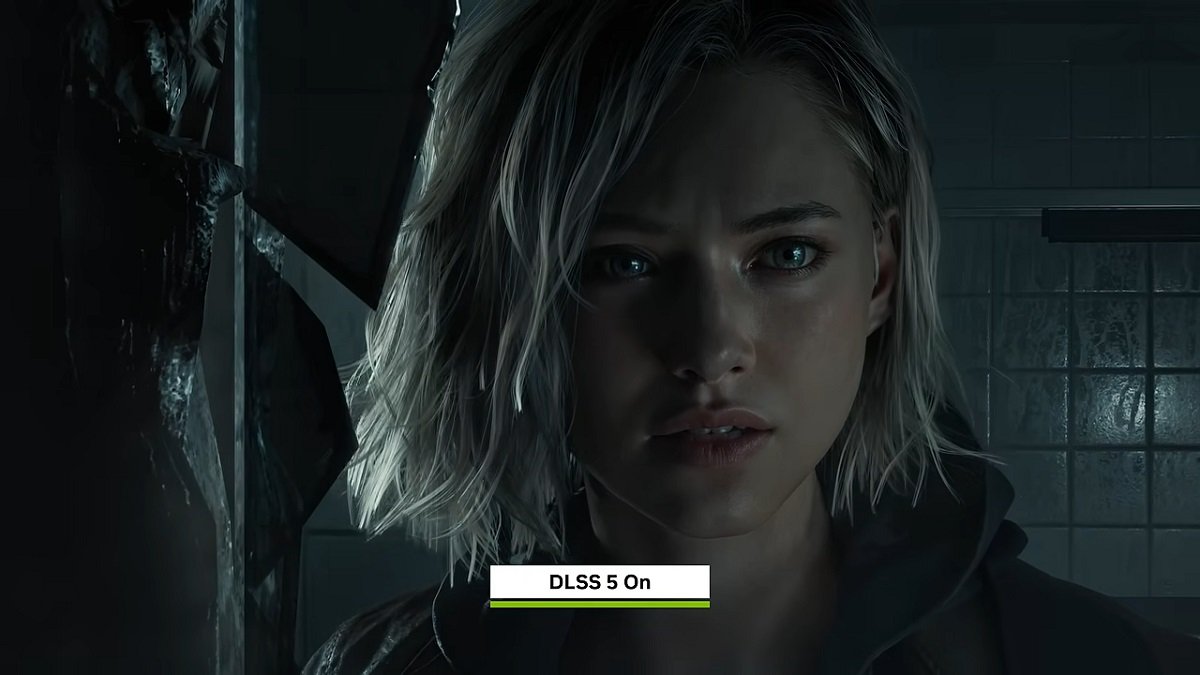

The reactions to Nvidia’s new DLSS 5 tech have been extremely negative, with people accusing it of turning games into AI slop.
While some are incredibly hostile to the idea of any AI related technology in their video games, it still has some benign uses. AI upscalers have been a thing for years and no one has any problems with them, since they simply make games look better, with higher resolutions and frame rates.
Even the Nintendo Switch 2 uses AI upscaling, which is why visually demanding games such as Cyberpunk 2077 still look good on the hardware, while Sony’s recent PSSR update has been described as finally justifying the existence of the PS5 Pro.
The same can not be said for Nvidia’s latest upscaling efforts. Recently, it unveiled DLSS 5, its latest breakthrough in upscaling technology, and the consensus is that it actually makes games look worse.
Nvidia describes DLSS 5 as being AI powered, which all previous DLSS versions were anyway, but in a blog post, Nvidia founder and CEO Jensen Huang tacitly admits that generative AI tech – the more maligned side of the technology – is being used here.
‘DLSS 5 is the GPT moment for graphics — blending hand-crafted rendering with generative AI to deliver a dramatic leap in visual realism while preserving the control artists need for creative expression,’ says Huang.
Expert, exclusive gaming analysis
Sign up to the GameCentral newsletter for a unique take on the week in gaming, alongside the latest reviews and more. Delivered to your inbox every Saturday morning.
Anyone with eyes, though, can see how it’s anything but an improvement. Take Nvidia’s first example, which uses Resident Evil Requiem. Protagonist Grace Ashcroft suddenly looks like she’s wearing heavy wake-up, had a nose job, and has been given poutier lips, looking like a woman prepared for a night out rather than the skittish and introverted FBI agent she actually is.

On ResetEra, someone put the same frame through other AI filters, like Nano Banana 2 and ChatGPT, which produced similar results. Although funnily enough the ChatGPT example is a bit better than DLSS 5, in that it still looks a bit like Grace.
This highlights how video game graphics have very much hit a dead end. They’ve already become so photorealistic that attempts to go beyond that just have the opposite effect.
It’d be one thing if DLSS 5 actually benefitted games with subpar visuals, such as Starfield, but its characters somehow look even more uncanny with the upscaling applied.

The official announcement video on Nvidia’s YouTube channel has been met with an overwhelmingly negative reception: 57,000 dislikes compared to 12,000 likes at the time of writing.
‘Now your game can look like an AI generated image,’ reads the top comment by DomZZZ23.
‘We went from ray tracing to slop tracing,’ writes ContentThatMakesMeContent.
Our favourite reply is this one from Wallrod: ‘This is like hiring someone to lick all the flavour off a potato chip before you get to eat it.’
This has also prompted a lot of unflattering (and funny) memes on social media, alongside unambiguous and harsh criticism of DLSS 5.
‘Every example of DLSS 5 I’ve seen makes everything look like a s***** YouTube thumbnail, like are we serious,’ says bobvids on Bluesky.
Serendi Pity calls it a ‘slopification tool’ and that ‘Your favourite games will lose all character and will instead look like every AI generated slop on the internet.’
‘Hide this trash with the rest of the Nvidia filters that no one uses,’ adds Jeff Grubb of Giant Bomb, while IGN’s Michael Higham simply calls it ‘absolute dogwater and belongs in the bin.’
Don't miss Gaming news! Add us as a Preferred Source
As a loyal GameCentral reader, we want to make sure you never miss our articles when searching for gaming stories. We have all the latest video games news, reviews, previews, and interviews, with a vibrant community of highly engaged readers.
Click the button below and tick Metro.co.uk to ensure you see stories from us first in Google Search.

Nvidia have acknowledged the hostility, as it has since pinned a comment below its announcement video to deny accusations that DLSS 5 is just an AI filter and that developers ultimately have final say on how their games should look.
‘Game developers have full, detailed artistic control over DLSS 5’s effects to ensure they maintain their game’s unique aesthetic,’ says Nvidia. ‘The SDK includes things like intensity, colour grading and masking off places where the effect shouldn’t be applied.
‘It’s not a filter – DLSS 5 inputs the game’s colour and motion vectors for each frame into the model, anchoring the output in the source 3D content.’
We’re sure many will continue to label DLSS 5 as an AI filter, but a number of publishers have approved of the tech and say they will be supporting it, including Capcom, Bethesda, Ubisoft, Warner Bros. Games, and Tencent.
The plan is for DLSS 5 to become widely available this autumn, with Nvidia listing numerous more games that will use it, such as Assassin’s Creed Shadows and the upcoming Phantom Blade 0.
For the time being, this should only apply to PC games, but if more of the industry embraces it, we could see similar technology be applied to future consoles.
Sony and Microsoft have partnered with AMD on their PlayStation 6 and Project Helix consoles, but they’ve also promised AI integration of some kind. It’s unclear what Sony has in mind, but Microsoft has plans to integrate its Copilot AI tool into current Xbox hardware so that’ll no doubt apply to Project Helix too.

Email gamecentral@metro.co.uk, leave a comment below, follow us on Twitter.
To submit Inbox letters and Reader’s Features more easily, without the need to send an email, just use our Submit Stuff page here.
For more stories like this, check our Gaming page.