

In the rapidly shifting world of modern geopolitics, it’s easy to let some major events slip from the front of your mind.
For example, less than two months ago we were still in the midst of the crisis that erupted from Donald Trump’s comments on Greenland. Leaders around the world were seriously pondering the possibility of the US invading the territory of a Nato ally.
One person who appears to have forgotten about the enormous panic and stress this caused is… Donald Trump.
With his distractible mind having drifted away from the Far North and towards the Middle East, the US President appears to be expecting those same allies to line up behind him as his war in Iran spirals out of control.
Instead, he has found himself confronting leaders who are only too keen to put clear distance between themselves and the massively unpopular actions of a massively unpopular man.
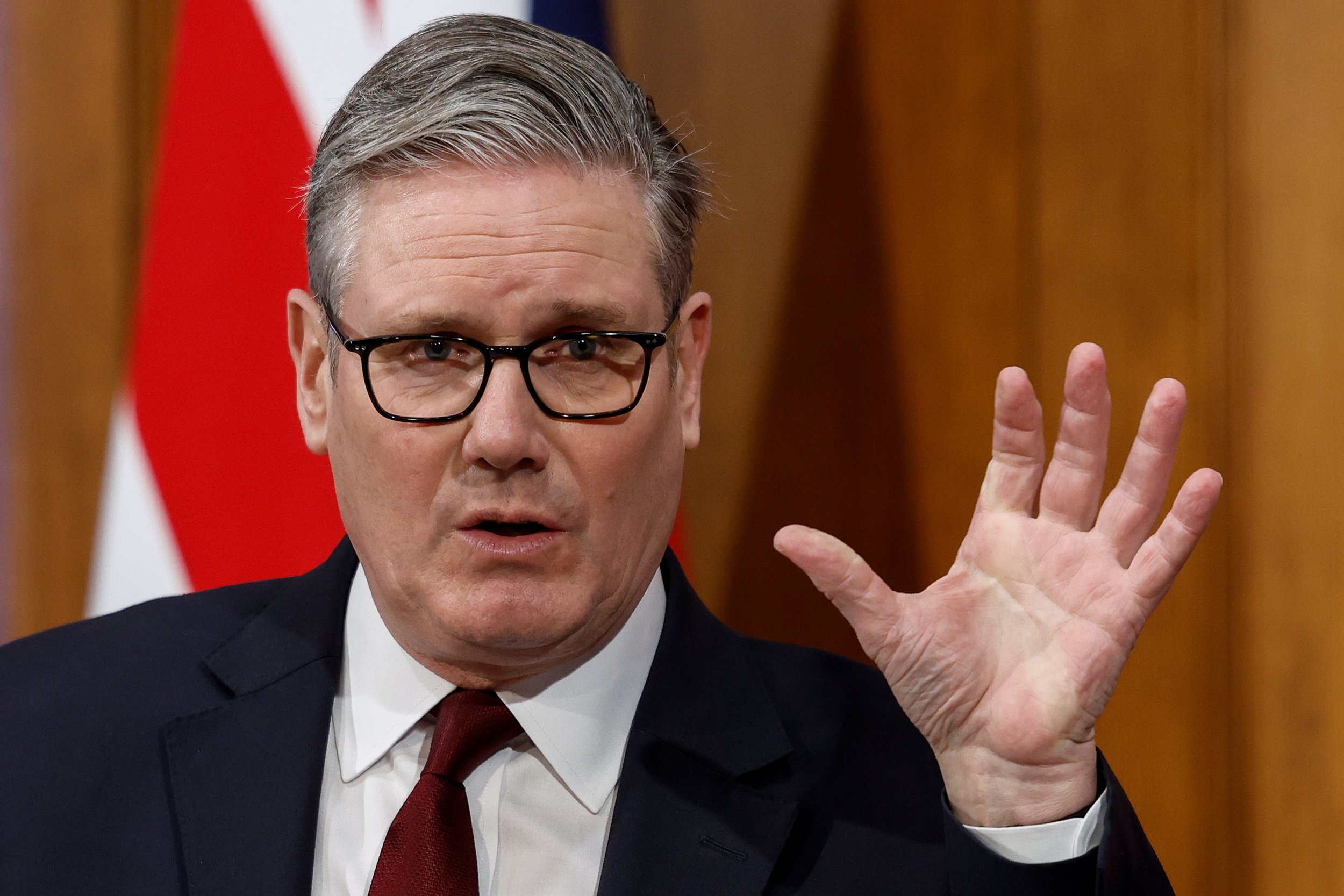
I watched this first-hand today in the press briefing room of No 9 Downing Street, where Sir Keir Starmer was delivering an update on the situation.
Want to understand more about how politics affects your life?
Metro’s senior politics reporter Craig Munro breaks down all the chaos into easy to follow insight, in Metro‘s politics newsletter Alright, Gov? Sent every Wednesday. Sign up here.
Astonishingly, he got through his entire 14-minute speech without mentioning President Trump once. When he spoke about a ‘viable collective plan’ to reopen the Strait of Hormuz, he highlighted his work with the European Parliament – not the US.
One of his ‘clear and consistent’ objectives, he said, was not to be ‘drawn into the wider war’. And he spent a considerable amount of time attacking other party leaders who had previously called for greater UK involvement.
Answering questions from the press at the end, he directly rebuked Trump’s overnight threat that it will be ‘very bad for the future of Nato’ if the alliance doesn’t help him stop Iran blocking the Strait.
‘Let me be clear,’ the Prime Minister said. ‘That won’t be, and it was never envisioned to be, a Nato mission. That’ll have to be an alliance of partners.’
Starmer didn’t show it on his face, but it must have been hard not to relish the opportunity to tell a President who so recently posed an existential threat to Nato that the military bloc wasn’t coming to save him now.

It just so happens that directly before this morning’s press conference, he had been meeting with Canadian PM Mark Carney – a man who, in no small part, owes his job to the widespread loathing of Trump in his home.
Perhaps Carney gave his British counterpart tips on how to reap the benefits of standing up to the White House.
But it’s certainly not just the UK that is giving the US the cold shoulder over Iran.
In a Truth Social post on Saturday, Trump urged countries to send ships to the Strait of Hormuz and help secure the crucial waterway.
So far, his request has been denied by Japan, Australia and Italy, according to Reuters, with South Korea and France saying they are yet to make a decision.
However, the most explicit rejection came from German Defence Minister Boris Pistorius.
‘What does Donald Trump expect, from a handful or two handfuls of European frigates in the Strait of Hormuz that the powerful American Navy cannot accomplish there alone?’ he asked.
‘I would think about that very carefully before we take that step, and I see absolutely no reason to do so. It’s not our war. We didn’t start it.’
The US President may be about to find out what happens when former friends are less interested in joining his war than cleaning up the mess that results from it.
Get in touch with our news team by emailing us at webnews@metro.co.uk.
For more stories like this, check our news page.