

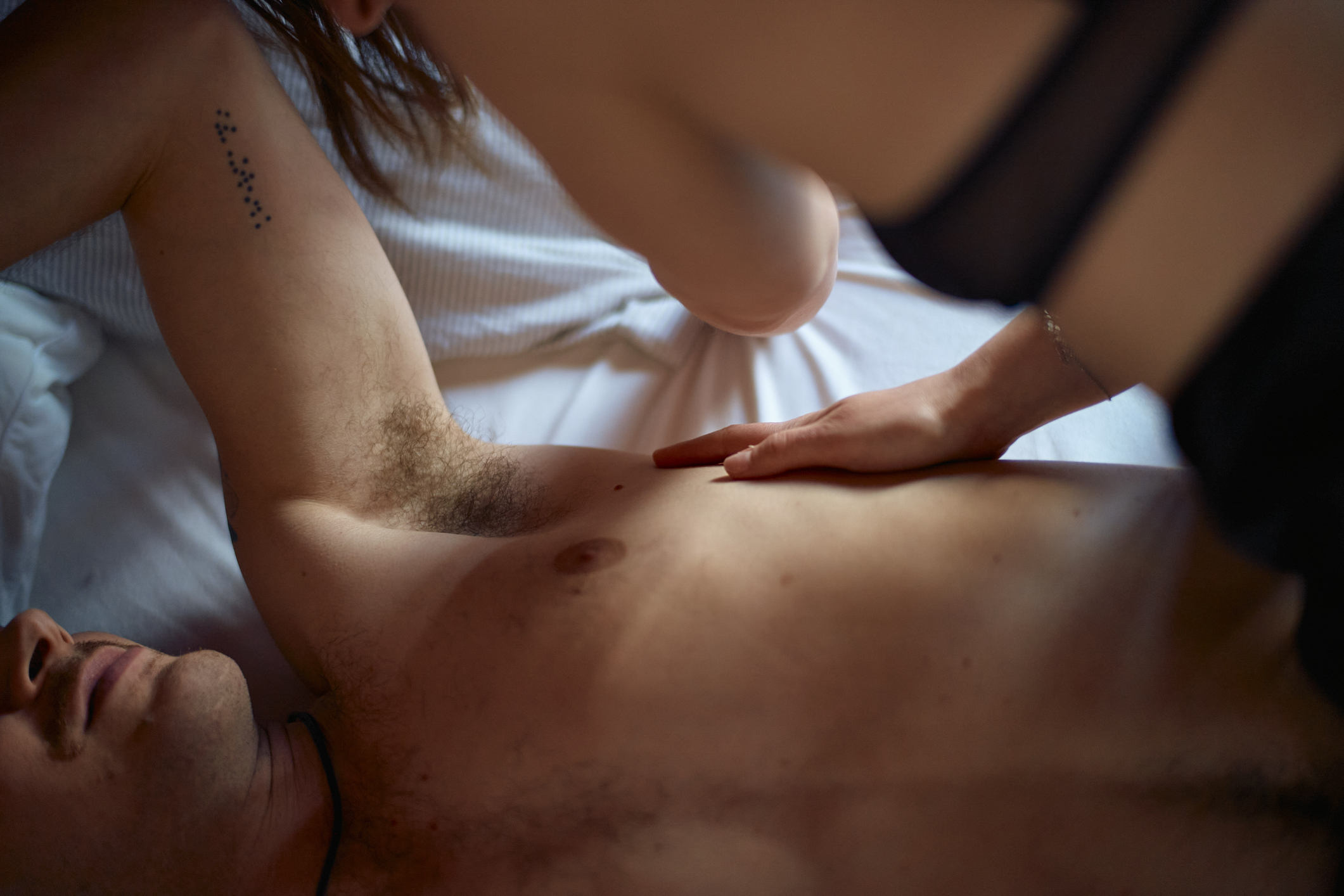

Sex is about a whole lot more than the finish line.
While some might have you believe that achieving orgasm is the pinnacle of pleasure, we know that is not a typical experience.
In fact, a 2022 study from YouGov found that just three in 10 women (30%) reported orgasming every time they had partnered sex – compared to 61% of men.
And too often, the rush to ‘get the job done’ keeps people from discovering the kind of touch that truly excites them.
Techniques such as ‘outstroking’ and ‘rippling’ have been embraced by those who enjoy slowing things down and concentrating on particular areas or subtle sensations.
But to really unlock deeper pleasure, whether alone or with a partner, it’s worth exploring something known as ‘pleasure mapping.’

What is ‘pleasure mapping’?
Certified sex coach and clinical sexologist Gigi Engle tells Metro that ‘pleasure mapping’ is a ‘practice that can shift how someone relates to their body and their sexuality’.
Sex. Love. Modern Mess. Listen to new Metro podcast Just Between Us
X Factor icon Diana Vickers and writer, broadcaster, and LGBTQ+ advocate Jack Guinness dive into your wildest sex, love, and dating dilemmas – every Tuesday.
Listen wherever you get your podcasts or watch on YouTube. And be sure to follow and subscribe so you never miss an episode.
You can also join the fun on our WhatsApp Group Chat here – share your dilemmas and Diana and Jack may just give you a call.
Rather than focusing solely on, say, the clitoris — a body part that only 2% of men and 3% of women could identify when shown a diagram— ‘pleasure mapping’ starts by taking the pressure for climax off the table.
It involves exploring the whole body slowly with your hands (think: arms, stomach, thighs, neck) without going straight to the genitals.
‘One partner touches while the other receives, with no goal of sex or orgasm. The person receiving can give gentle feedback like “softer,” “slower,” or “stay there,” which builds better communication around pleasure,’ she explains. ‘Then you switch roles.’
This process is not solely for couples, it can be just as fulfilling to explore on your own.
Why does ‘pleasure mapping’ help?
Pleasure mapping invites couples to move away from goal-oriented sex and towards sensation and bodily awareness.
The expert notes: ‘Sex therapists often recommend it because many people haven’t had the chance to explore what actually feels good to them outside of learned scripts from partners or cultural messaging.’
Experimenting with things such as different types of touch, pressure or sensation, individuals are encouraged to simply make note of the response.
What feels good? What feels neutral? And what feels most pleasurable?

‘What makes this approach powerful is that it centres agency,’ says Gigi. ‘Instead of guessing what a partner might like, people gain concrete information about their own bodies. It gives us the ability to not just say “I like this,” but how, where, and under what conditions something feels good.’
It’s also especially helpful for anyone who feels disconnected from their body, she adds, whether due to stress, shame, or habitually rushing through sex.
‘Pleasure mapping’ is all about creating a low-pressure space where there’s no “right” response. It just about gaining information. For your partner, yes, but most importantly – for yourself.’
How do you start ‘pleasure mapping’?
One of the easiest ways to start engaging in ‘pleasure mapping’ is by conducting a ‘body scan’ with touch.
If you are starting solo, Gigi explains that you should start by ‘setting aside time where you won’t be interrupted’, then work your way down your entire body.
Would you be interested in exploring ‘pleasure mapping’?
-
Yes
-
No
‘Vary pressure, speed, and type of touch and mentally note what feels neutral, what feels good, and what you might want more of. The goal is less about arousal and more about body awareness. Over time, you start to notice patterns, like preferring slower buildup or enjoying sensation in places you hadn’t considered pleasurable.’
Another solo approach is to layer in different sensations, using things like a soft fabric, body oil, or different temperatures.

Couples might want to keep track of their findings by ‘mapping zones’ together. This method involves treating the body as different regions to explore over time. One session might focus on the upper body, another on inner thighs or back.
However you do it, Gigi says what each method has in common is ‘intentionality’. It’s about ‘slowing down, removing pressure, and treating pleasure as something to explore rather than as a goal to achieve’.
Happy mapping.