

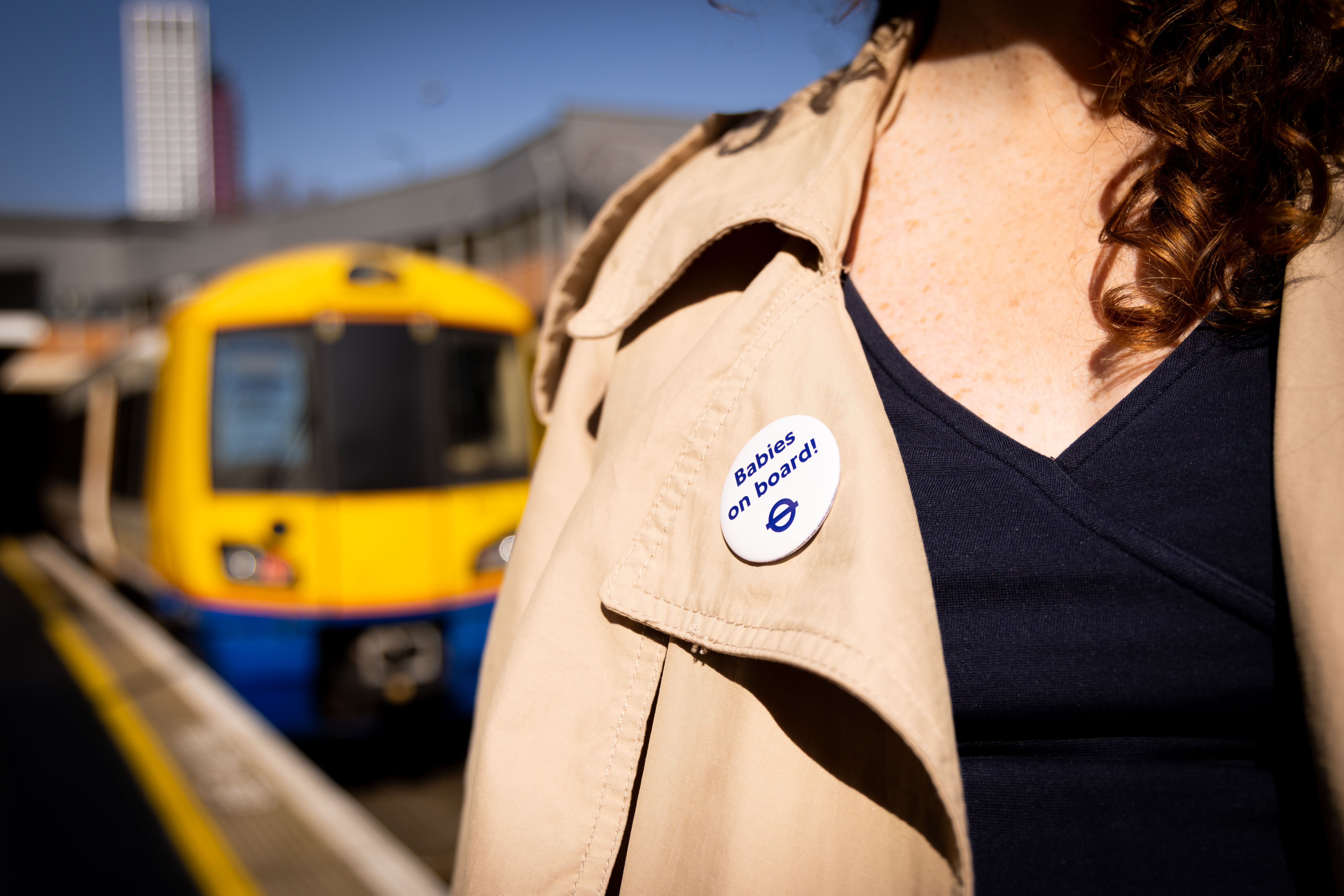

It’s been 20 years since the first women proudly pinned the white and blue badge announcing they have a ‘Baby on Board’ to their jackets and ventured onto London’s tubes and buses.
The badge was a great idea in theory, launched in March 2006 after TfL found pregnant passengers were made to stand for five stops on average before being offered a seat, and 35% were never offered one.
While the summer 2005 trial was successful, alleviating the awkwardness of having to ask fellow passengers to give up their seat, the badge’s effectiveness has seemingly worn off in the two decades since.
Made in Chelsea star Tabitha Willett sparked debate when she slammed ‘commuting men on their phones’ for not giving up their seats for her as she wore her Baby on Board pin.
People hit back claiming ‘being pregnant isn’t a disability’ and that she ‘chose to have a baby’, a sentiment perpetuated in the TikTok comment sections of mothers who share this exact same experience.
Mother-of-two Amy Swales, 43, is just one of the women who found the badge didn’t guarantee her a seat while she was pregnant.
‘I only wore the badge when I felt I had enough of a bump to justify it, even though early pregnancy could be absolutely exhausting,’ Amy tells Metro.
‘I didn’t want to have to justify it to strangers on the Tube who think the only discomfort in pregnancy is the size of the bump.’
But even when she did begin wearing her Baby on Board badge she found both men and women were reluctant to offer a seat.
‘I’d struggled onto the bus with an about-to-drop baby bump, a camping rucksack (on my way to the train) and a two-year-old in a pram,’ she says.
‘I ended up standing next to these two men in their thirties who were sat in priority seats next to where my pram was, with my huge stomach right in his face and he steadfastly carried on talking to his friend.
‘They were trying extremely hard not to look at me. People say you should ask, but knowing he’d definitely seen me, it was clear he didn’t think he should offer me the seat. I didn’t want to have a potentially confrontational conversation with him.’
Latest London news
- Mum awarded £5,000 over ‘too small’ Cartier bracelet that Harrods refused to take back
- What I Own: We saved £40,000 in a year and bought our £440,000 London home
- Man went on frenzied knife attack during rush hour at London station
To get the latest news from the capital, visit Metro’s London news hub.
Of those who did give Amy a seat during her pregnancy, it was always women her age who were the first to offer, while working male professionals were least likely to help.
Although, even when some people gave up their seat, they did it in a way that made her feel embarrassed.
‘I’d just got on the tube and hadn’t said anything or even stopped walking down the carriage when a woman sighed loudly in annoyance and huffed “I suppose you want me to get up now” and stood up,’ Amy recalls.
‘She then said “You know, I actually feel ill today”. I didn’t really know what to say or do.’
Amy believes that if someone doesn’t agree with giving up their seat for a pregnant woman, it’s because they see pregnancy as a ‘situation you’ve chosen’.
But choosing to have a child doesn’t make the physical side effects any less uncomfortable.
‘I don’t know if people who haven’t been pregnant realise what it does,’ Amy explains. ‘Hormones start softening your joints, bringing aches and pains, your bladder gets squished. You’re bone tired, your joints are flexible, you’re often nauseous, prone to headaches, and physically uncomfortable as you get bigger.
‘Near the end your organs are practically up in your chest – I think it’s reasonable to need a seat for five minutes.’
But their alleged ineffectiveness hasn’t stopped more than 80,000 women each year picking up a Baby on Board badge from TfL visitor centres in King’s Cross St Pancras, Liverpool Street and Victoria stations, as well as John Lewis after an All Things Baby appointment.
‘We are sorry to hear if anyone who needs a seat on our services is unable to get one,’ Emma Strain, Customer Director at Transport for London, tells Metro.
‘We recognise customers may be distracted by their phones or devices rather than looking up to see if someone nearby might need a seat more than them.’
Now, TfL is launching a ‘Babies on Board’ badge for those expecting twins, triplets, or more, to mark the badge’s 20th anniversary.
‘We hope these new badges will further raise awareness and encourage everyone to look up, be considerate, and offer their seat to others if they can, regardless of whether they are sitting in official priority seats or not,’ Emma adds.
Shauna Leven, chief executive of Twins Trust, adds she’s ‘thrilled’ to hear there is now a ‘Babies on Board’ badge. ‘For expectants pregnant with twins, triplets or more, life can be more challenging as they might face a high-risk pregnancy, extreme tiredness and morning sickness,’ she says.
More on commuters
‘I hope the badges will help to open up the conversation about multiples as people spot them and chat to expectant parents about the issues facing those expecting twins or triplets.’
From March 26, you’ll also be able to get either badge embroidered on items of clothing you purchase at UNIQLO, through it’s on demand UNIQLO Studio in-store.
Emma adds she hopes this will help every expectant parent to feel ‘supported and seen’.
Do you have a story to share?
Get in touch by emailing MetroLifestyleTeam@Metro.co.uk.