

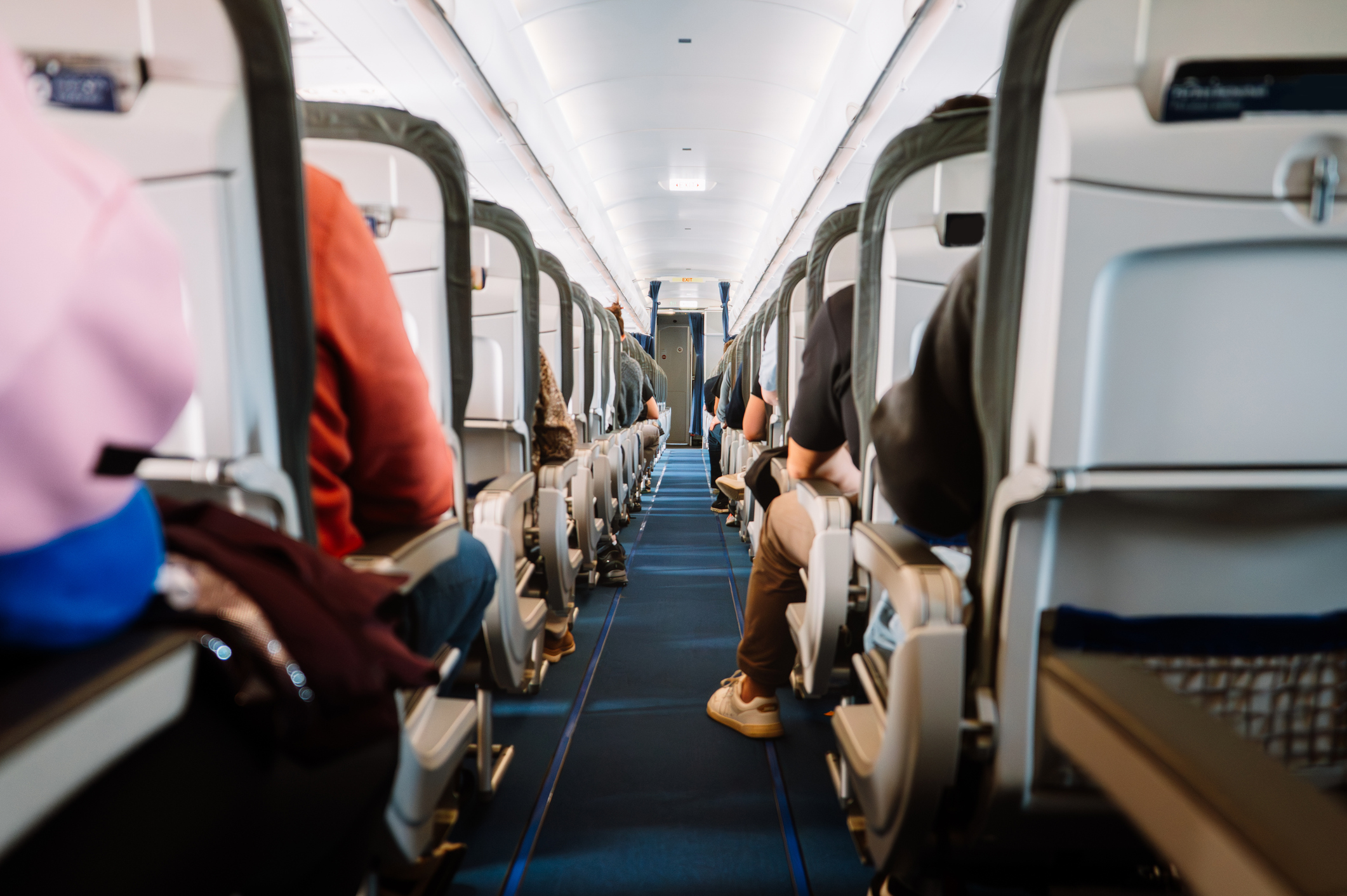

At 30,000 feet in the air, you really don’t want to experience any kind of emergency, but these situations are usually outside our control.
Thankfully, major medical situations on planes are relatively rare.
Del Willden, an ex-flight attendant who worked with British Airways for 26 years, says he only experienced two in his entire time as cabin crew.
But if it does happen, there are some little-known protocols staff have to follow, and Del, a former purser (Senior Cabin Crew Manager), has revealed them to Metro, as well as the one thing most Brits don’t realise about cabin crew training.
In the event of a medical emergency, Del says cabin crew would always start by asking passengers if there was a medical professional on board.
And while they were ideally seeking a doctor, nurse or paramedic, there was one other profession that help could be accepted from, and it might surprise you…
Best of Metro Deals
Get exclusive discounts with Metro Deals – save on getaways and spa days. Powered by Wowcher
Bannatyne Spa: Spa day for two with treatments, lunch & prosecco — save up to 57% off.
Mystery Escape: Hotel stay with return flights from as low as £92pp — save on worldwide holiday packages.
Beach Retreat (Lanzarote): 4* Lanzarote beach holiday with flights — save up to 58%.

‘We were always told that if a medical professional didn’t come forward, but a vet came forward and was prepared to help, we were allowed to accept that, he says.
‘We had to get them to sign a form of indemnity before they started to help, and it would usually only be if a situation was so serious it warranted help urgently.’
Until someone came forward, cabin crew would provide as much first aid assistance as they could, and Del claims they have much more rigorous training in this area than most Brits realise.
‘Until a professional came forward, we would act accordingly. So if it was a heart attack, we’d commence CPR immediately, while another crew member would gather equipment, like a defibrillator and oxygen, and someone else would keep the captain informed of the situation.’

As well as being trained in CPR, Del says he was also taught to deliver a baby, in case someone ever went into labour during a flight.
If there were no experts on the flight to help, the cabin crew would be able to call a company called MedLink for advice in the event of a medical emergency.
Each plane also had its own special medical kit on board, known as an M5. According to Del, half of the kit was for the crew to use, while the other half was intended for professional medical use.
As well as medical emergencies, Del says there are two other types of emergencies flight attendants may have to deal with – pre-planned and catastrophic.
A pre-planned emergency is a situation that develops during a flight and is something that cabin crew have been prepared to respond to. They’ll have protocols in place for dealing with the issue, and there’s usually a bit more time to handle it.

An example of a pre-planned emergency might be that the plane has lost its hydraulics for landing.
In a situation like this, Del said there would be an ‘alert call’ over the PA system from the captain, who would ask the senior cabin crew to report to the flight deck immediately.
‘As crew, if you hear that during the service, you would put your trolley away and go to your station (door) and await a call from the senior crew member,’ he says.
When the senior team member returned, they would then give their crew what’s called a ‘NITS’ breakdown for the emergency, which stands for nature, intention, time and special instructions.
For the hydraulics example, the nature of the emergency would be that the plane has lost the hydraulics, the intention might be to dump some fuel, and for time, the pilot might have said they have about 45 minutes until they need to land.
In this situation, Del says the special instructions could be not to evacuate the plane immediately once they’ve landed.
Following this, the next step would be for the crew to brief passengers on the situation.
‘We would go out into the cabin, and we’d all have various positions. The captain would do a PA announcement and tell them that there’s a situation and what’s happening, and then they would play a pre-recorded announcement,’ Del explains.
‘This always starts with “Attention, attention, this is an emergency announcement”, and then it would tell passengers to follow the crew’s instructions.’
He adds: ‘We would always go through the announcements twice, because we were taught that passengers won’t really take much in the first time as they’ll be a bit shell shocked, but once you play it a second time, it starts to sink in.’
For a catastrophic emergency, such as a plane crash, there isn’t the same amount of time to prepare, so Del says staff who are able to do so would have to act instinctively on whatever the situation is.
‘If you survive whatever is happening, there’s no time involved to make a plan, you basically, based on your training, would have to use your instincts and find a way to get passengers out of the plane. But before you open any doors, the most crucial step would be to look for fire or any other kind of danger.’
A version of this story was first published on June 8, 2025.
Do you have a story to share?
Get in touch by emailing MetroLifestyleTeam@Metro.co.uk.