

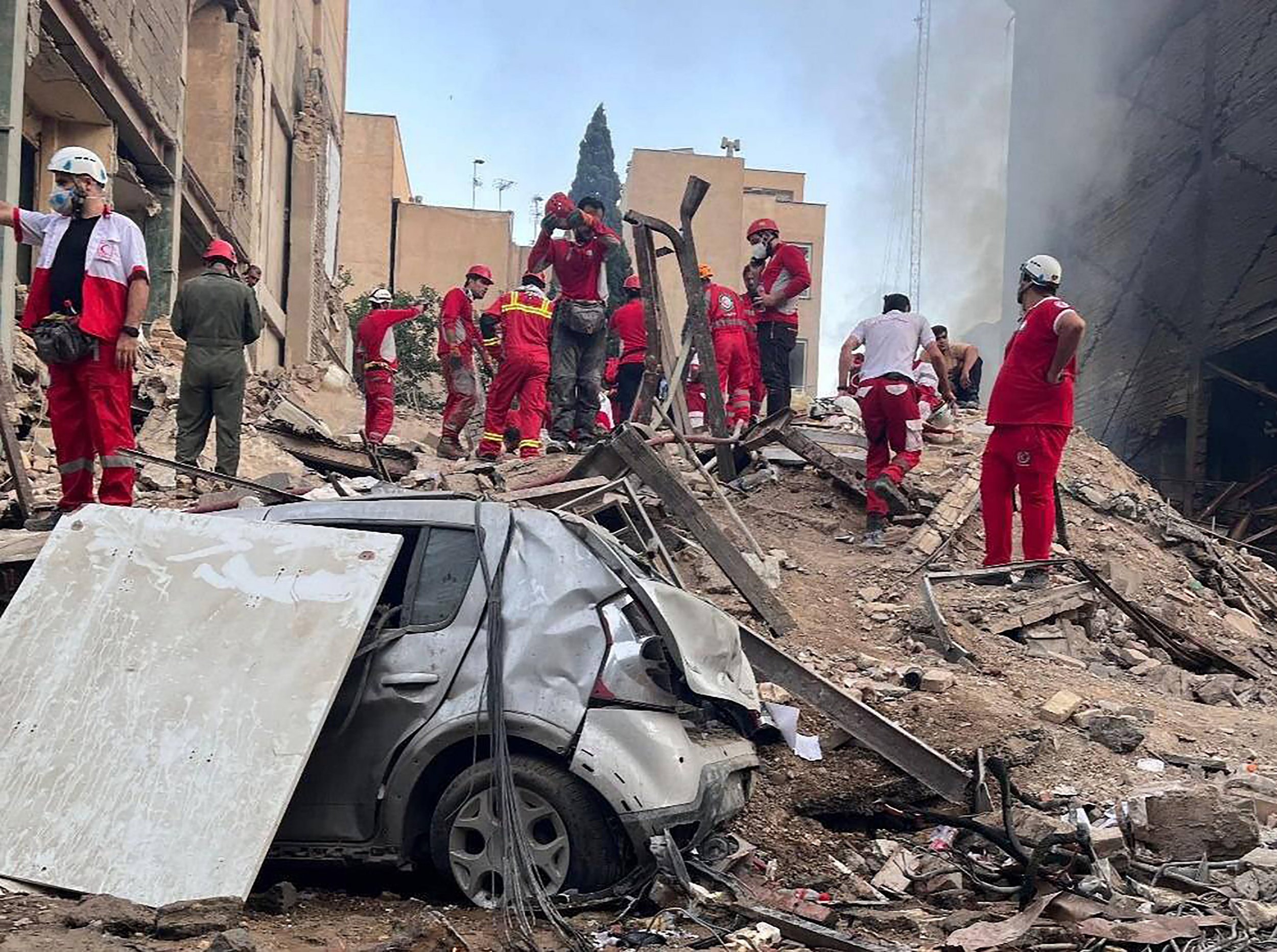

Iran has rejected the US peace plan and offered a five-point plan of its own, vowing to defend itself unless the conditions are met.
The White House promised to unleash ‘hell’ if Tehran didn’t agree to the plan, adding: ‘Iran should not miscalculate again.’
Speaking yesterday, Trump said Iran was ‘negotiating’ and ‘wants to make a deal so badly’ – a notion quickly dismissed by Iranian foreign minister Abbas Araghchi.
He told Iranian state television: ‘We do not plan on any negotiations’, and Tehran told the US through an intermediary that it will continue defending itself.
Here’s all you need to know about Iran’s demands for peace and what’s next for the region.
What has Iran asked for?

Tehran has reportedly set out five conditions, which, if met, they agree to end the war.
They include:
- Stopping ‘aggression and assassinations’
- Putting in solid mechanisms to ensure that Iran will not be attacked again
- Paying money for reparations after damage in the war
- Ending the conflict on all fronts and for all resistance groups involved
- International recognition and guarantees regarding Iran’s authority over the Strait of Hormuz
What has the US demanded?

The 15 point plan was submitted to Iran by intermediaries from Pakistan, who have offered to host new negotiations between Washington and Tehran.
Israeli officials, who have been advocating for Trump to continue the war against Iran, were taken by surprise by the US submission of a ceasefire plan.
The exact details haven’t been revealed, but intermediaries have reported each of the 15 points as including the following:
- Iran will dismantle all of its nuclear capabilities
- Iran will commit to never pursuing nuclear weapons
- Iran won’t enrich any more nuclear material
- All enriched nuclear material will be handed over
- Existing nuclear facilities will be destroyed
- The Atomic Energy Agency will be able to access all Iranian sites
- Iran will abandon proxies like Hezbollah and the Houthis
- Iran will stop funding and arming proxies
- The Strait of Hormuz will be opened
- Iran will limit the number and range of its missiles
- Missiles will only be used in self-defence
- Sanctions will be lifted on Iran
- Iran will develop a civil nuclear energy programme
- The threat of UN sanctions against Iran will be removed
How would negotiations work?
Any talks between the US and Iran would face monumental challenges. Many of Washington’s shifting objectives, particularly over Iran’s ballistic missile and nuclear programmes, remain difficult to achieve.
It is not clear who in Iran’s government would have the authority to negotiate or be willing to, as Israel has vowed to continue taking out leaders.
Iran remains highly suspicious of the United States, which, twice under the Trump administration, has attacked during high-level diplomatic talks, including the February 28 strikes, which started the current war.
At least 1,000 troops from the 82nd Airborne Division will be sent to the Middle East in the coming days, three people with knowledge of the plans told The Associated Press.
The 82nd Airborne is considered the US Army’s emergency response force and can typically be deployed on short notice.
Get in touch with our news team by emailing us at webnews@metro.co.uk.
For more stories like this, check our news page.