


A woman from London with no contact with Canterbury has reportedly developed potential symptoms of meningitis following the deadly outbreak.
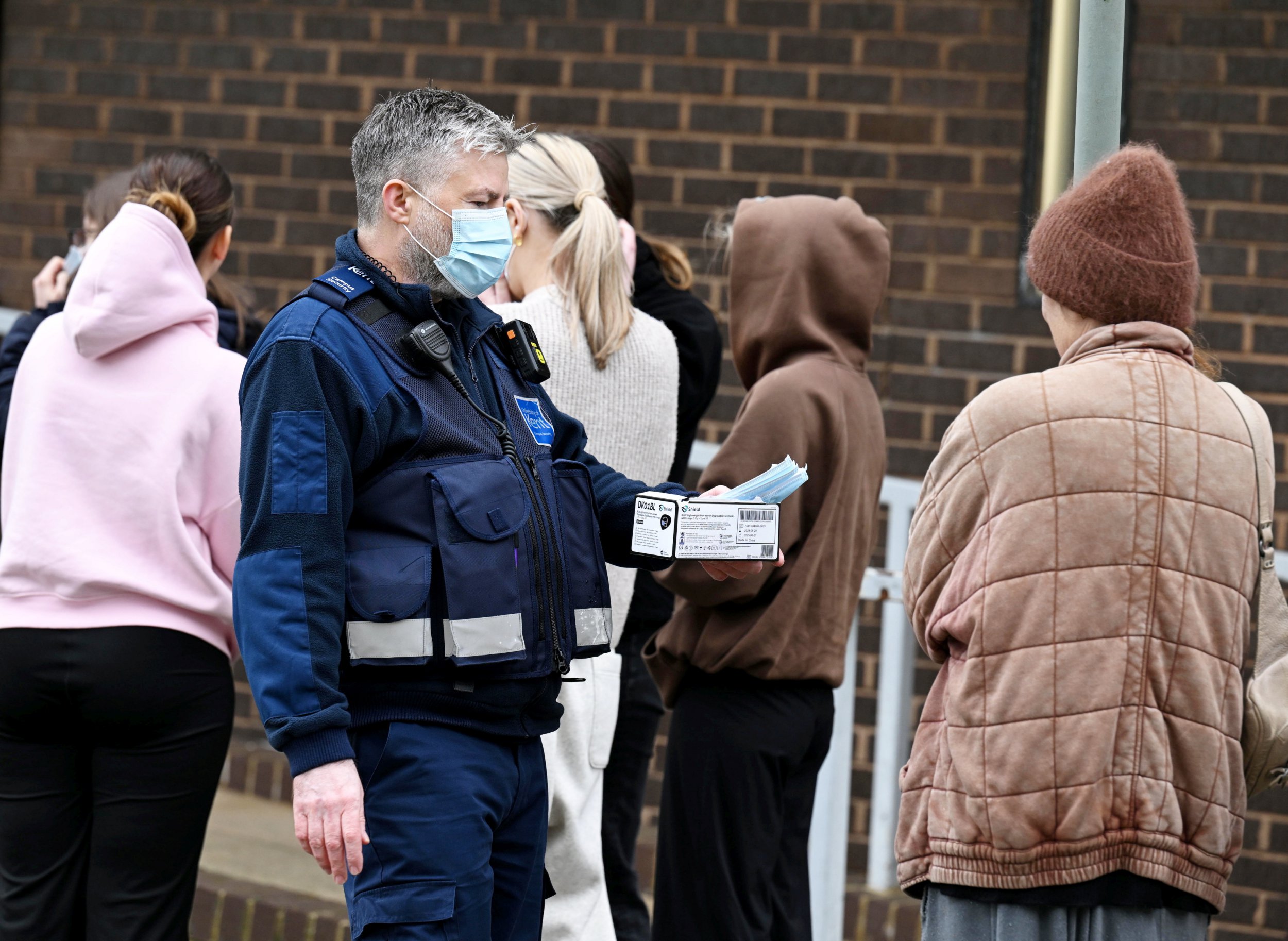
Health officials are trying to stop the meningitis outbreak and track and treat those who may have been in contact with suspected cases, and thousands of people queued up for antibiotics at the University of Kent yesterday.
Concern is growing over a potential wider spread after reports that at least one woman with no known contact with the Canterbury nightclub which has been linked to the outbreak.
Josh Risby, 26, said his sister, who lives and works in London, was admitted to the hospital with meningitis symptoms. She is not a student at the university, he told KentOnline.

He said his 24-year-old sister was admitted for treatment after they had seen each other on Mother’s Day.
Josh said: ‘Now the slight concern for us is that I’m not a student here, my girlfriend’s not a student here, my sister’s not a student here and she’s come down potentially with meningitis, so where’s that come from?
‘So we called 111 and said to them, you know, this is what’s happened, what do you advise? And they sent us up here to come and get the antibiotic basically.’
He described this as a ‘more of a precaution’ and that he wasn’t ‘overly worried’ about the situation.
Metro has contacted the UKHSA for a comment.
The UKHSA has confirmed that some of the known cases visited Club Chemistry in Canterbury between March 5-7 before becoming ill.
Those who visited the nightclub on those dates are asked to pick up preventative antibiotic treatment as a precaution.
Latest London news
- Mum awarded £5,000 over ‘too small’ Cartier bracelet that Harrods refused to take back
- What I Own: We saved £40,000 in a year and bought our £440,000 London home
- Man went on frenzied knife attack during rush hour at London station
To get the latest news from the capital, visit Metro’s London news hub.
The outbreak, which is thought to have originated from Canterbury, Kent, left two young people dead, one university student and an 18-year-old grammar school pupil.
The UK Health and Security Agency (UKHSA) has logged at least 13 further cases between Friday and Saturday, and several people remain in hospital.
What is meginititis?
The illness is caused by infection with a bacterium called Neisseria meningitidis, which inflames the membranes covering the brain and spinal cord.
The disease can progress rapidly, the UKHSA has warned.
While it is common among babies, young children, teens and young adults, it can infect anyone of any age, Caroline Hughes, support services manager at Meningitis Research Foundation, told Metro.
Symptoms include fever and chills, fatigue, vomiting, cold hands and feet, aches and pains, rapid breathing and, over time, a purple rash.
‘In the early stages it can be mistaken for a hangover, freshers’ flu or other mild illnesses, but it can become life-threatening within hours,’ Hughes said.
Symptoms can intensify in only a few hours – the bacteria can invade the bloodstream and cause sepsis, a life-threatening response to infection that causes clammy skin, pain and chills.
As a bacterial infection, meningitis can be spread through sneezing, coughing or sharing utensils.
Up to one in every 10 cases of bacterial meningitis is fatal, sometimes in as little as 24 hours after diagnosis.
Childhood coverage of the MenB vaccine – which protects against meningitis – was 89.1% in 2025, according to the agency.
The jab is given to children when they’re eight weeks, 12 weeks and one year old, but uptake has been decreasing nationwide for years.
The NHS also offers a free MenACWY vaccine to teenagers aged 13–15 (School Year 9) alongside the 3-in-1 booster, protecting against four meningitis strains (A, C, W, Y).
This vital, single-injection jab acts as a booster to protect against increased risks in young adults and is available from GPs up to age 25 if missed.
If you’re under 25 and you’ve not had the MenACWY vaccine before, you should ideally have it at least 2 weeks before starting college or university. Ask a GP about getting vaccinated.
Trish Mannes, UKHSA’s regional deputy director for the South East, said: ‘Our thoughts remain with the friends and family involved and we understand that many people in the university and wider community will be affected by this sad news.
‘Our investigations have identified that some cases visited Club Chemistry in Canterbury and it is important that anyone who visited the club between 5 and 7 March now comes forward for preventative antibiotic treatment as a precaution, as well as those offered antibiotics at the university – these students are being contacted directly through the university.
‘If you think you may have symptoms of meningitis, do not hesitate to seek medical help by contacting your GP or calling NHS 111.’
Get in touch with our news team by emailing us at webnews@metro.co.uk.
For more stories like this, check our news page.