

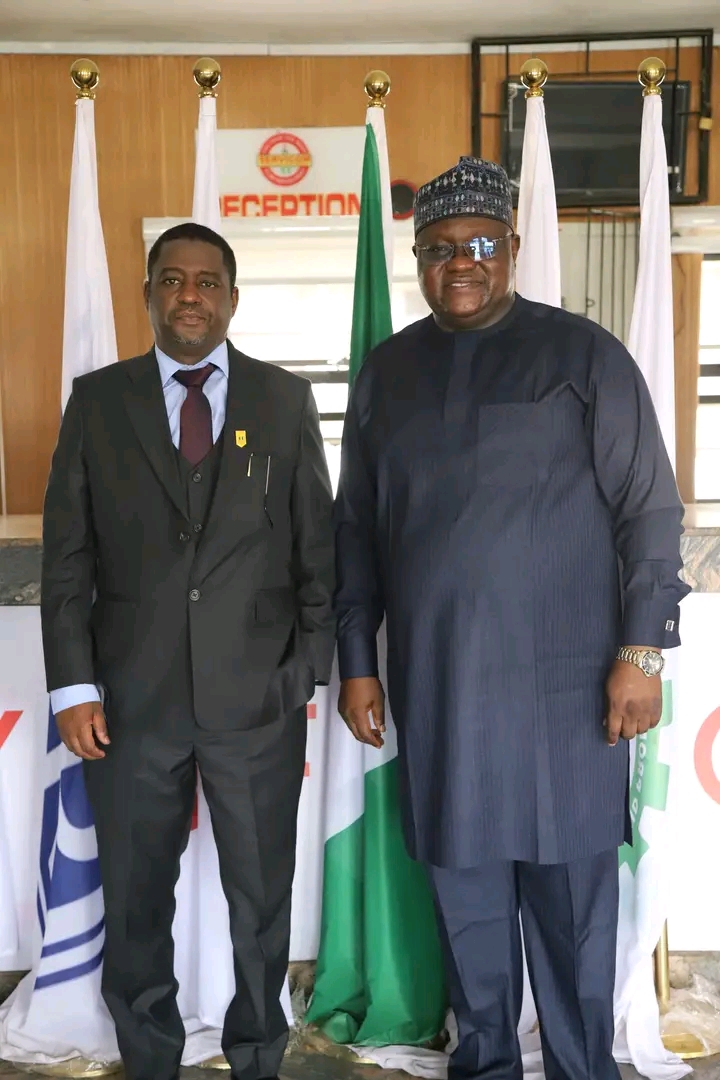
The Federal Ministry of Innovation, Science and Technology (FMIST) has reinforced its commitment to advancing research, innovation and infrastructure development through a strategic engagement with the Nigerian Building and Road Research Institute (NBRRI).
The meeting, held at the ministry, featured discussions between the Permanent Secretary of FMIST, Dr. Mukhtar Yawale Muhammad, MFR, mni, and the Director-General and Chief Executive Officer of NBRRI, Professor Samson Duna, on strengthening institutional collaboration and driving sustainable national development through science and technology.
FMIST Hosts Strategic Research Engagement With NBRRI
According to officials, the engagement focused on expanding cooperation in areas relating to scientific research, technological innovation and infrastructure advancement within Nigeria.
The Permanent Secretary, Dr. Mukhtar Yawale Muhammad, received the NBRRI delegation during a high-level briefing session aimed at exploring opportunities for deeper collaboration between the ministry and the research institute.
Stakeholders say the meeting reflects FMIST’s growing emphasis on integrating innovation and research into national development planning.
Observers also note that collaboration between government institutions and research agencies remains important for addressing infrastructure and technological challenges.
Focus on Research and Innovation
Discussions during the engagement reportedly centered on the role of scientific research and innovation in supporting economic growth and improving infrastructure systems across the country.
FMIST emphasized the importance of leveraging indigenous research capabilities to develop sustainable solutions for Nigeria’s construction, housing and transportation sectors.
Stakeholders believe that stronger investment in research institutions can improve local technological capacity and reduce dependence on imported solutions.
Analysts also note that innovation-driven policies remain critical for achieving industrial growth and long-term economic competitiveness.
NBRRI’s Role in Infrastructure Development
The Nigerian Building and Road Research Institute (NBRRI) is one of Nigeria’s leading research agencies focused on building technology, road construction, engineering materials and infrastructure solutions.
Observers say the institute has continued conducting research aimed at improving construction standards, housing development and transportation infrastructure nationwide.
Stakeholders also believe NBRRI’s technical expertise remains important for addressing infrastructure deficits and promoting sustainable urban development.
Experts note that stronger collaboration between research institutions and policymakers can improve project implementation and national planning.
FMIST’s Commitment to Technological Advancement
FMIST reiterated its commitment to supporting innovation-driven development through strategic partnerships with scientific and research institutions.
According to ministry officials, strengthening collaboration with agencies such as NBRRI aligns with broader government objectives aimed at promoting science, technology and innovation as drivers of national progress.
Observers say the ministry continues playing a central role in coordinating policies related to scientific advancement and technological development in Nigeria.
Analysts believe stronger institutional partnerships can accelerate the adoption of research-based solutions across different sectors of the economy.
Infrastructure and National Development
The engagement also highlighted the importance of infrastructure development in supporting economic productivity, industrialization and social progress.
Stakeholders noted that investments in roads, housing and public infrastructure remain essential for improving living conditions and supporting economic activities.
Observers say infrastructure gaps continue affecting transportation efficiency, urban growth and industrial expansion within the country.
Experts believe research-backed infrastructure policies can contribute to more durable, cost-effective and sustainable development projects.
Promoting Indigenous Solutions
FMIST emphasized the need to promote locally developed technologies and indigenous solutions capable of addressing Nigeria’s unique development challenges.
According to officials, supporting local research institutions can help strengthen domestic innovation ecosystems and improve national self-reliance.
Stakeholders say indigenous innovation remains important for reducing production costs and encouraging local industrial growth.
Analysts also believe research commercialization could create employment opportunities and stimulate entrepreneurship within the technology sector.
Collaboration Between Government and Research Institutions
Observers noted that partnerships between government ministries and specialized research institutes remain critical for translating scientific knowledge into practical development outcomes.
Stakeholders believe stronger institutional collaboration can improve policy formulation, technical implementation and resource utilization.
Experts also say coordinated research initiatives can enhance national capacity in infrastructure planning, environmental sustainability and industrial innovation.
Analysts note that cross-sector cooperation often strengthens the effectiveness of development programmes and public investments.
Innovation and Economic Growth
The discussions reportedly underscored the role of innovation in driving economic diversification and national competitiveness.
FMIST highlighted the importance of creating an enabling environment for research, technological development and scientific advancement.
Observers say countries that prioritize innovation and research often achieve stronger industrial growth and economic resilience.
Stakeholders also believe expanding research funding and institutional support remains necessary for strengthening Nigeria’s innovation ecosystem.
Leadership and Institutional Vision
The meeting further reflected FMIST’s broader vision of positioning science and technology at the center of national development strategies.
According to ministry officials, sustained engagement with agencies such as NBRRI remains important for promoting evidence-based policymaking and sustainable infrastructure development.
Observers say visionary leadership and institutional coordination are essential for achieving meaningful progress in the research and innovation sectors.
Experts believe long-term national development increasingly depends on the ability of institutions to integrate technology, science and innovation into governance frameworks.
Reactions From Stakeholders
Stakeholders within the science and infrastructure sectors welcomed the engagement, describing it as a positive step toward strengthening collaboration between research institutions and government agencies.
Some observers emphasized the need for continuous dialogue and investment in scientific research to address infrastructure challenges facing the country.
Others called for stronger implementation of research findings and locally developed technologies within public projects and development programmes.
Analysts believe sustained institutional partnerships can improve innovation outcomes and support national economic transformation.
Conclusion
The engagement between FMIST and NBRRI highlights growing efforts to place research, innovation and infrastructure development at the center of Nigeria’s development agenda.
As collaboration between scientific institutions and government agencies continues to expand, stakeholders believe stronger investment in research and technology will remain essential for driving sustainable infrastructure growth, industrial advancement and national progress.