

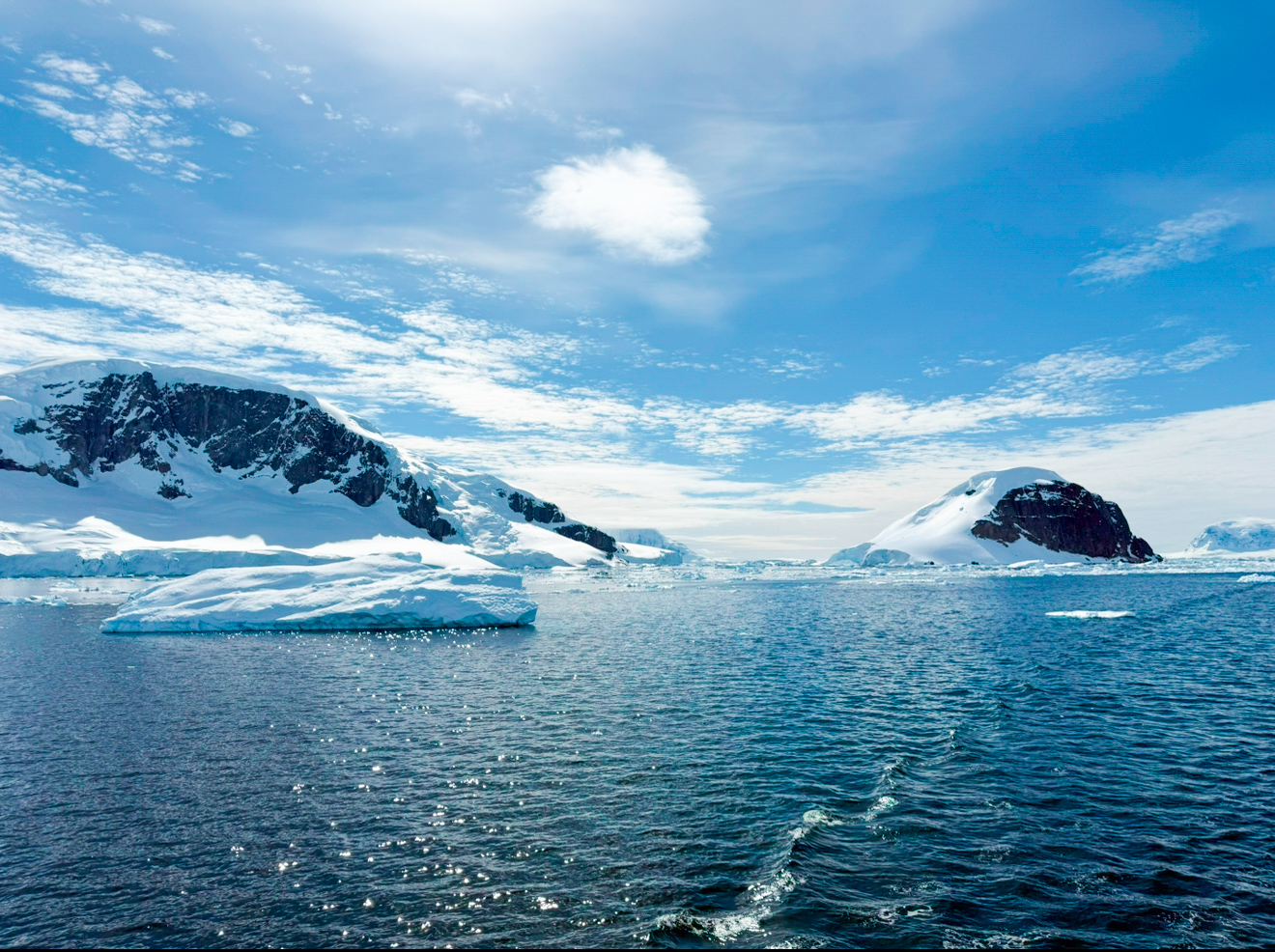

We can’t use the front door because there’s penguins nesting beneath it, so we go round the side of the post office and pull open the frozen back door instead.
‘Welcome to Antarctica,’ a woman says from inside the creaky cabin. I was on a quest to find queer pride on all seven continents, and it would be here, at the edge of the world, that my mission to find pride in Antarctica would finally come to fruition.
But getting there was no easy feat.
Polar Pride happens every year on November 18 in recognition of the LGBT+ communities who work in polar research. But unlike most pride events, it’s not something that’s open to the public.
Instead, it’s observed across dozens of international research stations by the queer people who live and work in Antarctica. As you can imagine, if you don’t work in the polar sciences, getting to one of these stations is damn near impossible.

Journalists have been invited to these research stations before, but it’s usually to document moments of important scientific discovery. My human-interest story was a lot harder to sell.
There was one base, however, that showed an interest. Rothera Research Station, operated by the British Antarctic Survey, has become one of the most significant landmarks for LGBT+ visibility in Antarctica.
It was the backdrop for the first legal same-sex marriage to take place on the continent and one of the first places to celebrate Polar Pride, raising pride flags around the base to honour LGBT+ researchers.
Join Metro's LGBTQ+ community on WhatsApp
With thousands of members from all over the world, our vibrant LGBTQ+ WhatsApp channel is a hub for all the latest news and important issues that face the LGBTQ+ community.
Simply click on this link, select ‘Join Chat’ and you’re in! Don’t forget to turn on notifications!
Sadly, despite their enthusiasm, the base was temporarily unable to accommodate additional guests. And despite my offer of being ‘willing to sleep in a broom cupboard’, it just wasn’t going to work.
So it was back to the drawing board. I hit countless rejections before a lead came finally from Chile. The Ministry of Foreign Affairs had reviewed my proposal, and they had a counter offer.
They didn’t just want me to come and observe the pride celebrations, they wanted to use my presence as a catalyst for something bigger.

The Chilean Antarctic Institute have a polar research base on King George Island, an Antarctic island shared by many different nations including China, the USA, Brazil, Russia and South Korea.
Their idea was to host a pride celebration in No Man’s Land, inviting people from each nation – regardless of their individual countries’ LGBT+ laws – to join in an international celebration of pride.
It was a phenomenal thought, one that could have been a unifying moment for queer people everywhere, but to the frustration of everyone involved, the logistics once again proved impossible.
Antarctica is not an easy beast to tame, and despite doing everything in our power, November 18 came and went, and I wasn’t anywhere near The Antarctic to celebrate.

I thought I‘d failed, but the following day an email came through that changed everything.
I was sweating in the heat of a Singaporean food markets when I looked down at my phone. ‘Happy Pride from Antarctica.’ Sent from the team at the British Antarctic Survey.
A photo of a single pride flag breezing against a sea of endless white. I realised in that moment that it didn’t matter that I wasn’t there on the date I’d envisioned. Pride matters 365 days a year, and this was a story that still deserved to be told.
Getting to a research base may have been impossible, but there were other ways to get to Antarctica, and so I began looking into expedition cruises.
I was concerned about the ethics of travelling to Antarctica in this way. Tourism to the white continent can have a hugely negative impact on the environment – but then I discovered Swan Hellenic’s ethical expeditions, which run exclusively on small ships.

They also have an exceptional track record of celebrating the LGBT+ community. This is important as a recent study from Booking.com shows that 59% of LGBT+ people have experienced discrimination when travelling. Swan Hellenic’s commitment to creating an experience that is ethical in more ways than one made them an easy first choice.
Luckily for me, they jumped at the opportunity to help me document pride in Antarctica.
Exactly how I was going to do that, I wasn’t yet sure, but steadfast in my belief that queer people exist everywhere, I boarded their expedition ship and began the two-day journey to the polar south.
Finding pride on this journey was going to be a challenge, but with 155 of us onboard the SH Diana, I knew statistically there had to be others who identified as LGBT+.
On the morning we arrived, I had my first success. I’d opened my eyes at 5am to spot a glint of pristine blue sailing past my balcony.

On realising it was an iceberg, I’d run to the freezing cold top deck to find two guys up there huddled together for warmth.
As we marvelled at our first sight of humpback whales, they told me they’d been a couple for more than 40 years.
It wasn’t their first trip here either – they’d gotten married as soon as the USA legalised same sex marriage and came here on their honeymoon. Now, some ten years later, they were back for their anniversary.
And they weren’t the only queer couple celebrating onboard. I met an Australian pair at dinner who were visiting every continent for their honeymoon.
‘When my wife Hanna and I got engaged, we considered eloping,’ Krystle Hawkesbury tells me. ‘But we knew our marriage was only possible because generations before us refused to live in the shadows. They fought for the right to love openly, and we felt a responsibility to honour that by being visible and unapologetic.
She continues: ‘At a time when queer history and symbols are being removed or rewritten, presence itself is powerful. Visiting all seven continents and standing in Antarctica as a married queer couple was our way of carrying that hard won visibility right across the globe.’
It seems I wasn’t the only one on a mission to celebrate queer love all over the world.

‘What about penguins?’ one of the scientists from the ship teases.
We’re trenching through the snow, the penguin highways full of happy little birds scampering about their business. ‘They’re probably the gayest animal in existence,’ he continues. As an openly gay man himself, he’s become particularly interested in my journey.
And he’s not wrong – penguins are known for their same sex relationships, and watching them clumsily stumble around the ice does remind me of being in a gay bar at 3am. It was tempting to centre my story around them, but then I found something better.
I spotted it as we opened the door to the Penguin Post Office. A rainbow flag just outside the window. A symbol of queer resistance in the coldest reaches of the planet.
By extraordinary coincidence, the woman who welcomed us inside was loudly and proudly queer. Dale Ellis, the manager of the Penguin Post Office, remains the only person I have met who lives in Antarctica.

Considering I came here looking for queer life, the fact she happens to be queer is astounding. I’d say ‘what are the chances’ but queer people do tend to break away from conformity, and I can’t think of anything less conformist than to take a job out here.
‘It’s very likely that there has always been queer people working in polar communities,’ she explains.
‘But historically, social stigma, criminalisation and personal safety would have made openness impossible. It’s only through personal letters and diaries that we can find clues or indirect references to the LGBT+ people that lived and worked here. It’s hard to think back to all those who never got to be openly themselves but Polar Pride is an opportunity to take a moment for them. Our existence isn’t debatable. We are here, and we always have been.’

The people I met on my journey are proof that queerness exists absolutely everywhere.
I’d hoped to find just one example of queer life in Antarctica, and yet I came away with several.
From the manager of the post office, to the scientists on the ship, the passengers celebrating their love, and the penguins skidding around the ice.
We’re everywhere, across all seven continents, always have been, and always will.
Getting there
Swan Hellenic is a luxury expedition line specialising in polar voyages. Offering all-inclusive sailings from November – March, a 10-night departure starts at £8,880pp, including internal flights, airport transfers and one night pre-cruise accommodation.