
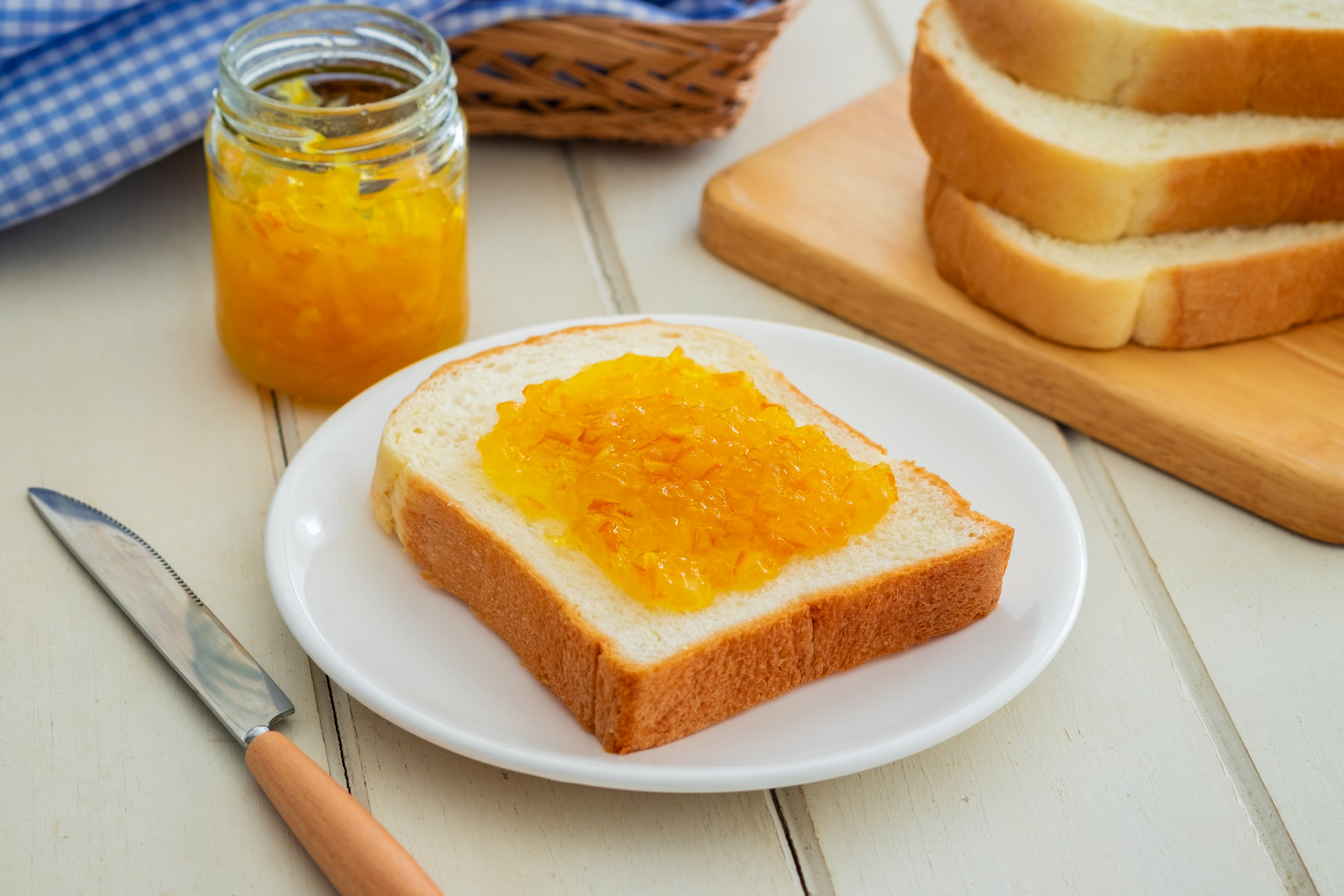

In news that would leave Paddington Bear shook, marmalade might be undergoing a rebrand soon.
The classic orange breakfast spread could have a name change if a new government food deal with the European Union goes ahead.
The post-Brexit agreement would align Britain with European food regulations, meaning a few items could look a little different on supermarket shelves – including marmalade.
This is due to changes to labelling rules in Brussels, where the legal definition of marmalade has been relaxed.
For decades, regulations meant that only preserves made from citrus fruits could be labelled and sold as marmalade, while other fruit preserves had to be known as jams.
However, after the UK left the EU, the rules were updated to allow non-citrus spreads to be called marmalade for the first time.

So, what would this mean for marmalade in UK shops?
If the EU food deal goes ahead, the marmalade naming rule would also apply to the UK, and our labelling would need to change.
Currently, in other European countries, jams are known and sold as marmalade, which can cause some confusion. In Italy, jam is called marmellata, while it’s marmalade in Germany and mermelada in Spain.
You can see why having a distinction comes in handy. As such, citrus-based spreads are now clearly distinguished as ‘citrus marmalade’.
To bring the UK in line with this rule, the legal name for the classic spread would become ‘citrus marmalade’.
It’s not yet clear whether marmalades made with other fruits, such as strawberry, plum, or fig, would need to be labelled and sold in quite the same way, e.g. as ‘strawberry marmalade’.

Northern Ireland is already preparing to introduce the citrus name change in summer 2026, as it is aligning with EU food laws under the 2023 Windsor framework deal.
Hey, foodies! Add us as a Preferred Source
At Metro Food, we’re here to bring you all the latest foodie news, delicious recipes, restaurant reviews, and cooking tips. As a loyal reader and a part of our vibrant community, we want to make sure you never miss our articles when searching for stories
Click the button below and tick Metro.co.uk to ensure you see stories from us first in Google Search.

Currently, NI has no plans to distinguish other types of marmalade in supermarkets, other than citrus-based ones.
The UK is also looking to make the same change, as part of a deal which would see 76 updated EU laws introduced here.
Updated regulations would also cover farming, food hygiene, and organic pet food.
If all goes to plan, Labour hopes the deal will come into force in mid-2027, but no timeline for marmalade rule changes has been revealed yet.
The history of marmalade in the UK
Marmelade was first brought to the UK in the 15th century, when it was imported from Spain and Portugal.
But back then, it was made with quince paste and called marmelada.
Quince jelly/paste is still made today and often eaten with cheese, but marmalade, as we now know it, has changed.
One of the earliest orange marmalade recipes dates back to 1677 and was created by Eliza Cholmondeley and known as ‘marmalat of oranges’. Another popular one was published in Mary Kettilby’s 1714 cookbook, A Collection of Above Three Hundred Recipes.
But the commercial success of marmalade as a breakfast spread is often credited to James Keiller in Scotland.
As the story goes, James’ wife, Janet, is said to have made a batch of marmalade from Seville oranges that arrived damaged in Dundee harbour. This reportedly inspired James to set up the first commercial marmalade factory, under James Keiller & Son, in 1797.
By the late 19th century, many other regional marmalade brands had cropped up across the UK and gained popularity.
Flash forward to today, and the spread is a beloved breakfast staple – there’s even a World Marmalade Festival and Awards held in Cumbria each year.
Do you have a story to share?
Get in touch by emailing MetroLifestyleTeam@Metro.co.uk.