
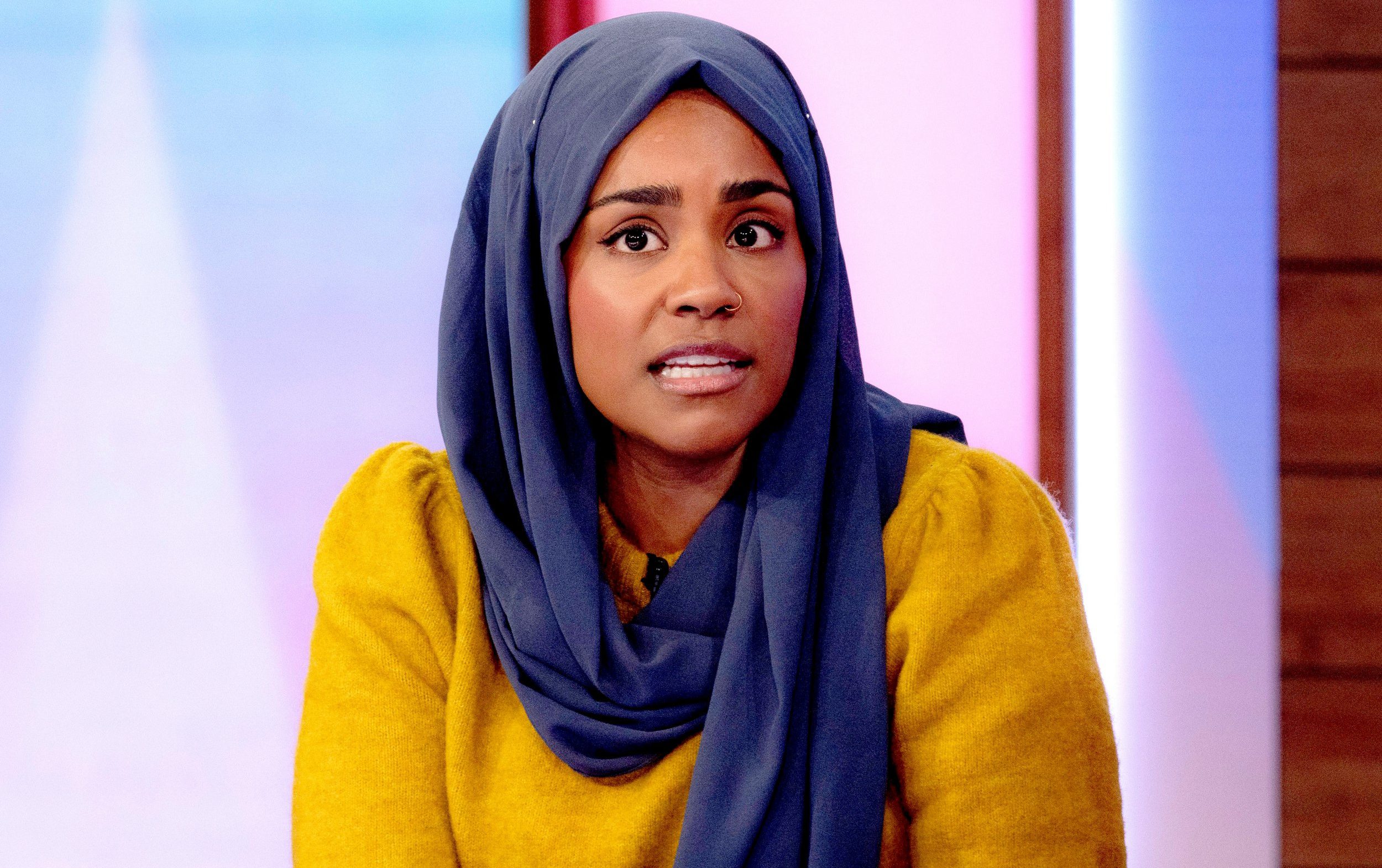

When the BBC announced last June that it had ‘made the ‘difficult decision’ to not commission another cookery show with Nadiya Hussain but ‘remain open to working with her in the future’, it marked the end of a decade-long TV partnership for the Great British Bake Off winner.
Since her exit, Nadiya has become increasingly outspoken about the fact that she feels she was treated differently due to being a Muslim. She’s shared how she’s struggled to navigate the systemic racism within the ‘broken’ TV landscape, and her realisation that it was something she couldn’t change.
In her latest interview, Nadiya claimed she had tried to have ‘difficult conversations’ with bosses about how she wanted to shift away from her identity (‘the easily digestible Muslim’) and focus on the food. ‘Not long after, my show was cancelled,’ she commented.
These difficult truths about how hard the media landscape is to navigate as a Muslim woman have led to inevitable, tiresome backlash. And now, it would seem, her critics are more than willing to prove her point.
Get personalised updates on The Great British Bake Off
Wake up to find news on your TV shows in your inbox every morning with Metro’s TV Newsletter.
Sign up to our newsletter and then select your show in the link we’ll send you so we can get TV news tailored to you.
Yesterday, TV personality Ulrika Jonsson complained about Nadiya’s ‘embarrassing moaning’ and telling her to ‘shut her cakehole’.
Writing in The Sun, using the ‘Dear Nadiya’ open-letter format so beloved of contrarians, Jonsson claims that Nadiya ‘moaned and pleaded for public sympathy’.
She also called the Bake Off winner ‘dismissive’ and with ‘a seeming sense of entitlement about her’. Those latter claims, by the way, are based on what Jonsson herself refers to as a ‘brief encounter’ in a daytime TV show green room.

What’s embarrassing is not speaking out about how you’ve been treated, it’s launching a personal tirade about someone you’ve met once for two minutes.
It’s so tiring to once more see this kind of rinse-and-repeat attack which only proves how difficult it is to be a minority who dares speak her mind – and Jonsson’s far from the only person to join in on the gleeful pile-on.
The Spectator’s Gareth Roberts declared: ‘This is what you get when you mix identity politics with popular culture: a rather sickening concoction’. TalkTV’s guest Malcolm Clark called it ‘endless whining’ and accused Nadiya of ‘seeming to think the fact she wears a hijab entitles her to license payer largesse.’
It’s stomach-turning watching the media turn on a Muslim woman, especially given the state of the country right now.
Ask any of us, and we can tell you about coming up against discrimination in their life. In a government report released earlier this month, Home Office statistics showed that ‘hate crimes targeting Muslims are now at record levels. 4,478 crimes were recorded in the run-up to March 2025 – up a fifth on 2024 – and representing almost half of all religious hate crimes.’

Since I was in school, I’ve faced abuse of some shape or form for my identity, whether it’s rancid social media diatribes from fellow students or being told time and time again that institutional change was impossible.
When Nadiya spoke about refusing to be ‘grateful’, it was a powerful sentiment. All too often, minorities are made to feel that they should grit their teeth and simply smile, even when they know there is wrongdoing.
The onscreen cookery scene has an alarming lack of prominent South Asian, let alone Muslim, chefs fronting shows on major networks like the BBC.
In a landscape where we’re used to household names such as Jamie Oliver, Nigella Lawson and Mary Berry, Nadiya was one of only a handful of people of colour who made the cut.
After growing a large fanbase and, for several years, becoming the poster girl for the BBC backing diversity, the cruel and sudden way she was pulled from screens was horrid to watch.
And the reaction to the cookbook author’s decision to stop saying thank you and speak about her experiences has been eye-opening.
As for the rumours that she’s been difficult to work with, or that her star had faded, the BBC has had plenty of practice of giving people second, third and fourth chances.
It took Jeremy Clarkson physically punching someone before he was ousted – and don’t get me started on Lord Sugar.
The double standard over who the BBC is willing to back and protect, and who not to, is ridiculous.
I don’t have a crystal ball. I’m sure there are various reasons someone is picked up or chopped from the BBC, including ratings, space on the schedule and cultural relevance.

But these days, bigotry isn’t about open, naked hostility. It’s much more insidious than that, and much easier to gaslight people who experience it.
Even if the reasons for the axe is something as simple as diversity being ‘out of vogue’ (the way our country is heading) and Nadiya not fitting the right agenda anymore, that’s an extremely bleak outlook.
What’s even more grim is that for these media ‘personalities’, a Muslim woman like Nadiya, who wants – and crucially, has the platform – to talk about the injustices she experiences, is simply fair game for puerile putdowns.
To use a format they’ll recognise, dear Ulrika et al: my suggestion is that you put down your fury- and bile-filled pens or microphones and take a moment to listen, for a change.
Do you have a story you’d like to share? Get in touch by emailing Ross.Mccafferty@metro.co.uk.
Share your views in the comments below.