

Thirty years after Leonardo DiCaprio and Claire Danes set hearts aflutter in Baz Luhrman’s Romeo + Juliet, it remains the best Shakespearean adaptation on the big screen.
For me, this movie is the crowning jewel in the filmmaker’s acclaimed repertoire – which also boasts The Great Gatsby, Moulin Rouge and Elvis – and encapsulates this era of the 90s in every layered frame.
Paying homage to the drag culture prevalent on the silver screen at the time, it joins movies like Priscilla, Queen of the Desert and The Birdcage. Meanwhile, this decade was also big on subversive Shakespearean tales with hits such as Shakespeare in Love and the coming-of-age romp 10 Things I Hate About You.
Yet even side-by-side with its wide-ranging contemporaries, Romeo + Juliet stands out among the crowd for how it captures that feeling of tortured love and ever-present angst that goes so hand-in-hand with the intensity of the teenage experience.
I first watched the 1996 movie as a teenager at school, studying the text for GCSE. At first, I was happy to fob off work for some movie watching.
But as the film progressed, not only I but my entire class were left enthralled by the stunning soundtrack, the bold fashion choices and everything in between.

No easy feat for a gaggle of 15-year-olds uninterested in analysing yet another monologue about a pathetically pining Romeo.
When I sat down to write this very piece to mark the anniversary, the impression the movie has left a decade later is clear. My group chat of school friends was flooded with praise as we took a trip down memory lane.
Stranger still is that this film feels like a time portal where, when I click play, I’m 15 again and experiencing it among friends for the first time.
So, where to begin?
The way the smouldering sun cast behind a young Leo launched a thousand crushes; our star-crossed lovers locking eyes through a fishtank soundtracked by Des’ree’s ballad, I’m Kissing You; Harold Perrineau’s explosive and heartwrenching turn as a doomed Mercutio.
The overflowing Catholic imagery, the drag sequences, the razor-sharp dialogue that makes this 16th-century text seem as though it were written yesterday…
But, hang on, I’m getting ahead of myself.

Set in a contemporary ‘fair Verona’ torn asunder by the warring Montagues and Capulets, this two-hour odyssey, spoken in the original Shakespearean, is a sultry, gritty tale where Luhrrman takes big swings which pay off in spades.
After a scene-setting prologue read aloud by a news anchor of a place haunted by violent civil war, we’re plunged right into the action with Benvolio (Dash Mihok) and his crew (bar Romeo, who is sulking about Rosaline) having a gas station showdown with Tybalt and his cronies.
It’s no understatement to say that Dash’s delivery of the ‘bite my thumb’ gag is truly inspired, while Tybalt’s unruly cowboy mafia aesthetic is deliciously unhinged. In other words, the movie begins how it intends to go on – highly strung and full of feist.
It was the first time I had truly understood the quirks of humour in this play that had once felt impenetrable.
By the end of the opening sequence, sat at home, you can taste the salty sweat atop their lips and feel the stretch of tension threatening to tear this city apart at the seams.
Our eponymous leads meet at a fancy dress party hosted by the Capulet patriarch, from which their sworn enemies, the Montagues, are naturally banned. Still, high on drugs, our intrepid trio – Romeo, Benvolio and Mercutio – attend the festivities.


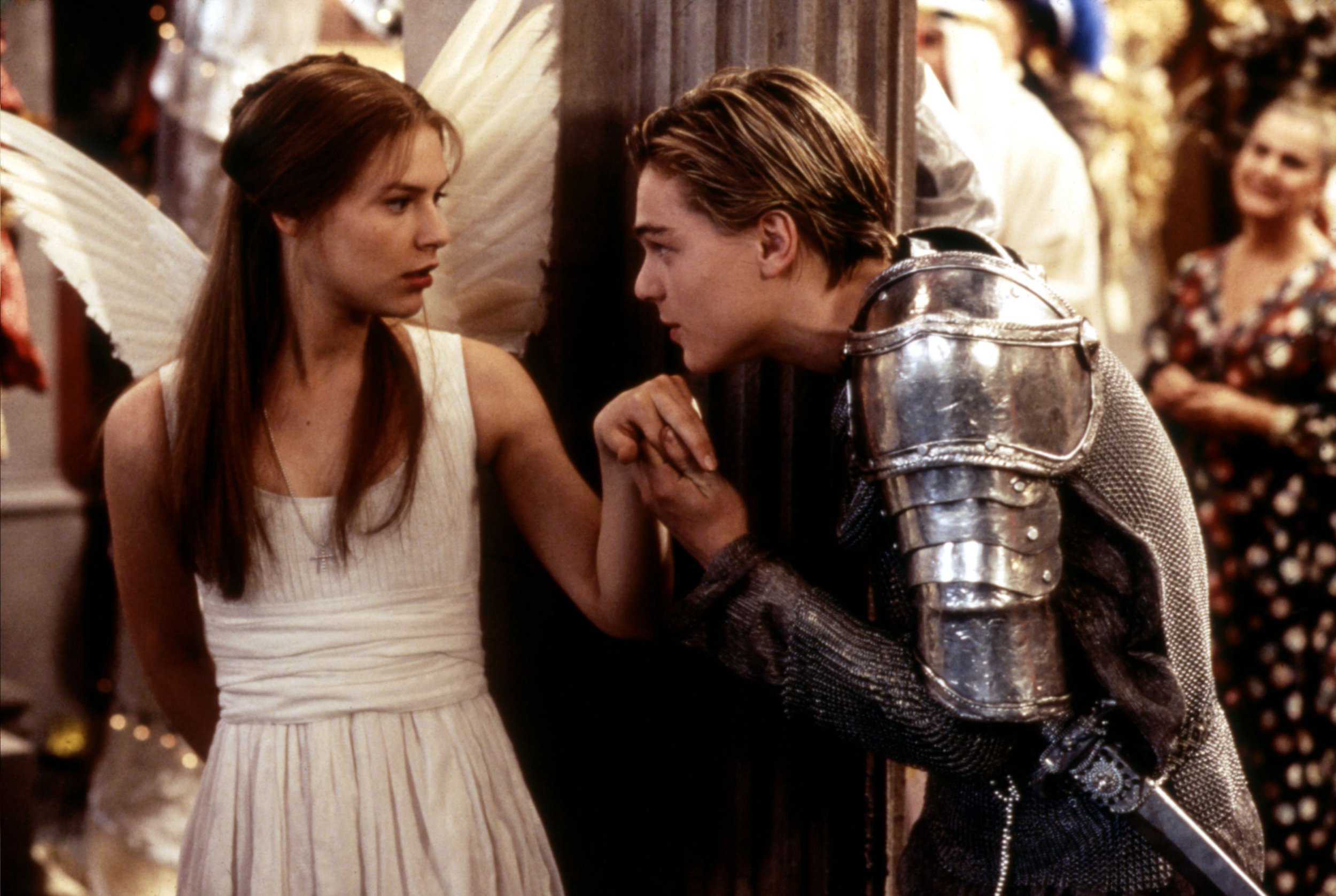
Mercutio puts on the lip sync performance of a lifetime with Candi Stanton’s Young Hearts Run Free before we get one of the most romantic scenes in cinematic history as knight-in-shining-armour Romeo and heavenly angel Juliet meet, culminating in a swoonworthy kiss in the elevator.
‘Did my heart love till now? Foreswear it, sight. For I never saw true beauty till this night,’ be still my beating heart!
The cherry on top of this sequence is, of course, Paul Rudd’s note-perfect portrayal as the ditzy, astronaut-suit-clad Paris, Juliet’s eligible bachelor.
The sun-filtered romance is finely balanced by the constant thrum of tragedy underpinning the story. Tybalt’s self-destructive fury is visceral, Mercutio’s ultimate sacrifice utterly gutting (‘A plague o’both your houses’)
His parting monologue, infused with a frenzied anguish, deeply unsettled something within me at the time, a feeling that returned tenfold when I recently rewatched it.


Luhrmann’s mastery of the ever-rising stakes means that, even though we all know what this wretched love is careening towards, the final moments set in the cross-and-candle-decked cave, where both die in one another’s arms, remain exquisitely painful to watch.
This is an adaptation that not only understands the text but elevates it to new heights – and the cynical part of me cannot see it being replicated today, brewed as it is in a perfect storm.
The decorated Hamnet tackles the deep cut of grief, 00s flick She’s All That embraces the messiness of late adolescence and West Side Story proves the versatility of the famed playwright’s work – but Romeo + Juliet manages to straddle all these themes with ease.
Imbued with an aching pathos, a time capsule of the 90s and unapologetic in its high camp, colourful tone, Luhrmann has created a timeless piece that holds up to the scrutiny of three decades.
Romeo + Juliet is available to stream on Disney Plus.
Got a story?
If you’ve got a celebrity story, video or pictures get in touch with the Metro.co.uk entertainment team by emailing us celebtips@metro.co.uk, calling 020 3615 2145 or by visiting our Submit Stuff page – we’d love to hear from you.