

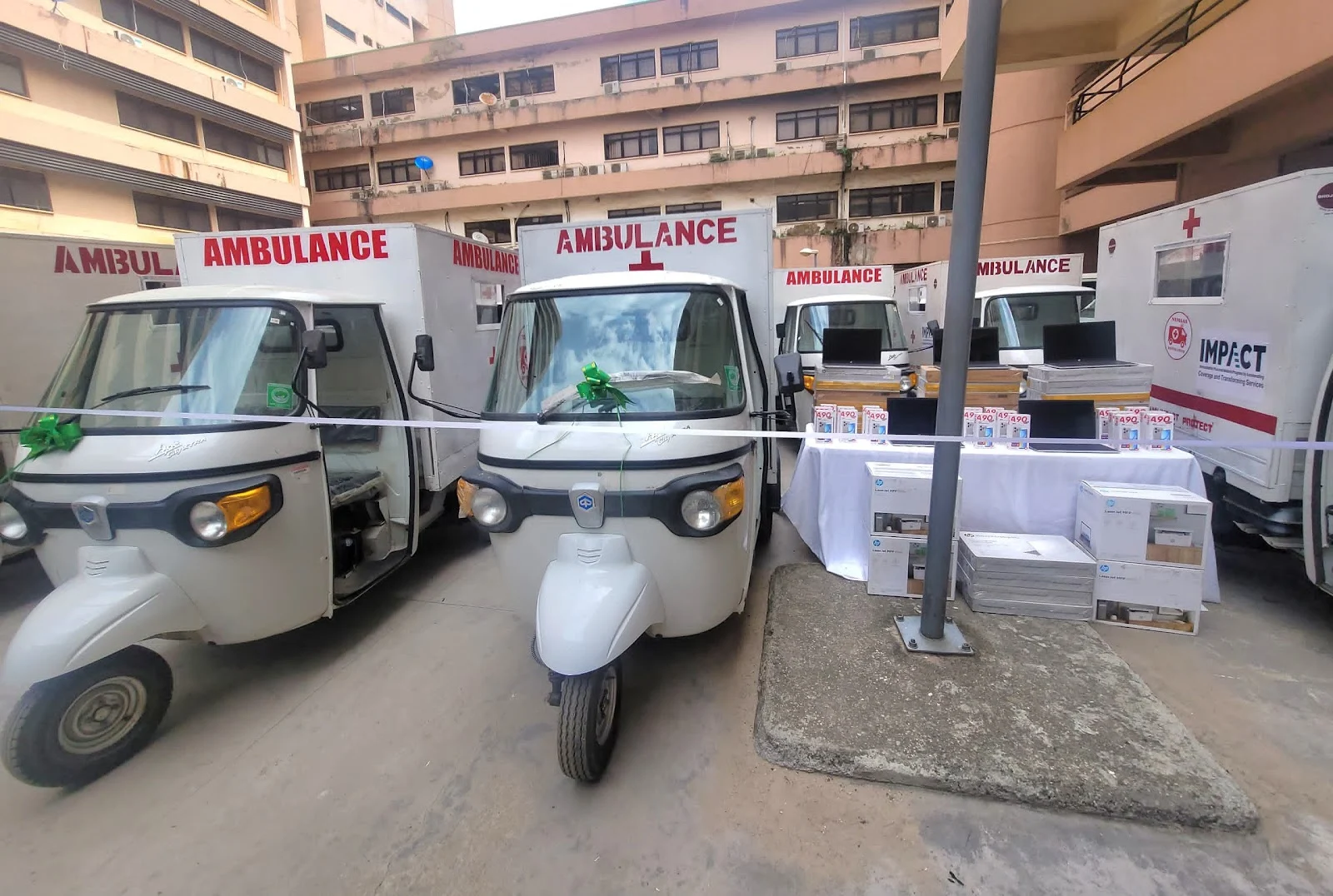
President Bola Ahmed Tinubu has launched a major emergency healthcare intervention programme featuring the deployment of 145 tricycle ambulances, six boat ambulances, and emergency communication equipment aimed at improving access to life-saving medical services across Nigeria. The initiative forms part of broader health sector projects commissioned to mark the third anniversary of his administration.
The intervention was unveiled under the National Emergency Medical Service and Ambulance System (NEMSAS), with government officials describing it as one of the largest emergency healthcare response expansions in the country’s history.
Tinubu Launches 145 Tricycle Ambulances to Rural Communities
The initiative is designed to improve emergency medical response, especially in rural, riverine, and hard-to-reach communities where conventional ambulances often face mobility challenges.
According to the Federal Ministry of Health and Social Welfare, the rollout includes 145 tricycle ambulances, six boat ambulances, emergency dispatch systems, and communication equipment intended to strengthen pre-hospital care nationwide under the administration of President Tinubu.
Officials stated that the intervention aims to reduce preventable deaths by ensuring faster access to medical assistance during emergencies.
Emergency Healthcare System Gets Major Upgrade
Speaking during the launch, President Tinubu reiterated his administration’s commitment to making quality healthcare accessible to all Nigerians, regardless of location. He said the emergency response system must function as a unified national structure capable of serving citizens across both urban and remote areas.
The President noted that healthcare reforms remain a critical component of the Renewed Hope Agenda and emphasized the importance of strengthening emergency medical services nationwide.
The donation reflects ongoing efforts to improve healthcare access and emergency preparedness across the country.
Health Ministry Highlights Life-Saving Goals
Minister of State for Health and Social Welfare, Dr. Iziaq Adekunle Salako, described the initiative as a major step toward ensuring that no Nigerian loses their life because emergency medical help could not arrive on time.
According to him, the new emergency assets will strengthen response systems for maternal health emergencies, trauma cases, and other urgent medical situations.
Salako stated that the ambulances, dispatch equipment, and communication systems represent strategic investments in emergency healthcare delivery and national health security.
Focus on Maternal and Newborn Healthcare
Government officials disclosed that the emergency response fleet will operate under the SAVEMAMA programme, which focuses on reducing maternal and newborn mortality by improving access to emergency obstetric care.
The tricycle ambulances are expected to transport pregnant women, newborns, and emergency patients from remote communities to healthcare facilities where timely treatment can be provided.
Officials noted that the programme is particularly important in areas with limited transportation infrastructure.
Additional Healthcare Projects Commissioned
Beyond the ambulance deployment, the Federal Government also commissioned several healthcare infrastructure projects across different states. These include Emergency Operations Centres in Kano, Katsina, and Sokoto states, the Lagos Vaccine Hub, and new primary healthcare facilities in Kano and Delta states.
Other projects inaugurated include the Trauma Centre at Ahmadu Bello University Teaching Hospital, Zaria; the Mental Health Complex at the University of Maiduguri Teaching Hospital; the Laboratory Complex at the University of Uyo Teaching Hospital; and the Infertility and Assisted Reproductive Technology Centre in Bauchi.
The government described these projects as part of wider efforts to improve healthcare infrastructure across all six geopolitical zones.
Government Highlights Health Sector Progress
Health officials stated that the administration has expanded health insurance coverage by more than 33 percent, revitalised over 4,000 primary healthcare centres, and established 15 new federal tertiary health institutions since 2023.
They also disclosed that more than 500 specialist healthcare infrastructure projects, including cancer centres and diagnostic facilities, have been developed to improve treatment capacity and reduce medical tourism.
The launch of 145 tricycle ambulances is being presented as part of these broader healthcare reform efforts.
Rural Healthcare Expected to Benefit
Permanent Secretary of the Federal Ministry of Health and Social Welfare, Daju Kachollom, explained that many of the tricycle ambulances would be stationed at primary healthcare centres in rural communities. Trained drivers and healthcare personnel will accompany the vehicles whenever emergency transportation becomes necessary.
Officials believe the intervention will significantly improve referral systems, emergency response times, and access to healthcare services in underserved areas.
Conclusion
As Tinubu launches 145 tricycle ambulances, it represents a major investment in Nigeria’s emergency healthcare system, with a strong focus on rural communities, maternal health, and rapid medical response.
Alongside the commissioning of multiple healthcare facilities nationwide, the initiative highlights ongoing efforts to strengthen healthcare infrastructure, improve access to life-saving services, and expand emergency medical coverage across Nigeria.