
The European Central Bank is expected to pause its run of interest rate cuts on Thursday as faltering tariff negotiations with the U.S. obscure the path forward.
The ECB has cut rates eight times in nine meetings since mid-2024, but key policymakers have indicated that they want to take things a little more cautiously now that they believe interest rates are no longer hindering the economy. As such, market expectations for a cut when the Governing Council reconvenes on July 24 are relatively subdued.
On Sunday, U.S. President Donald Trump upended weeks of efforts to keep the EU-U.S. trade relationship on a relatively even keel, with plans to levy a baseline 30 percent tariff on imports from the EU. The EU scrambled to respond and is now eyeing tariffs on €72 billion worth of U.S. imports, including aircraft, cars and car parts.
The revival of a scenario in which EU exports are hurt and imports are made more expensive has nudged the euro area toward “stagflation,” a combination of stagnation and inflation. That’s particularly difficult for central bankers to contend with.
Earlier this month, for instance, Latvian central bank Governor and ECB rate-setter Mārtiņš Kazāks was confident enough to predict that the U.S. and EU would negotiate a mutually favorable settlement, telling Bloomberg that any economic fallout would land within the ECB’s “baseline scenario.”
But on Tuesday, speaking to POLITICO, Kazāks adopted a more restrained tone, saying only that the ECB would now have to wait and see when it meets later this month.
“It is not good, of course,” he said, referring to the threat of 30 percent tariffs. “But we are still to see if it is the destination/end result or just a negotiation strategy. And we must learn what Europe will do.”
Mission accomplished — awaiting next one
In his last speech before the pre-meeting ‘quiet period’, Chief Economist Philip Lane had said the bank considers its four-year struggle to bring inflation back to target as “largely complete.” The task ahead, he added, is to ensure that short-term swings in inflation don’t become entrenched, stressing that the risks were two-sided.
The two influential Germans on the Governing Council, Head of Markets Isabel Schnabel and Deutsche Bundesbank President Joachim Nagel, have both come out against a move next week. Schnabel said that “the bar for another rate cut is very high,” and Nagel told Handelsblatt that a “steady hand” is needed.
BNP Paribas chief European economist Paul Hollingsworth said in a note to clients that while he expects the ECB to resume cutting in September, “we see a risk of the ECB staying on hold for longer due to the uncertain outlook and growing push-back from hawks.”

But other policymakers are more worried about what they see as heightened risks to growth and have fewer reservations about calling outright for further easing.
At a gathering of Italian bankers last Friday, Bank of Italy Governor Fabio Panetta warned that tariff shocks and the euro’s appreciation this year both point to further disinflation, casting doubt on the ECB’s base assumption that a dip in inflation next year will soon even itself out.
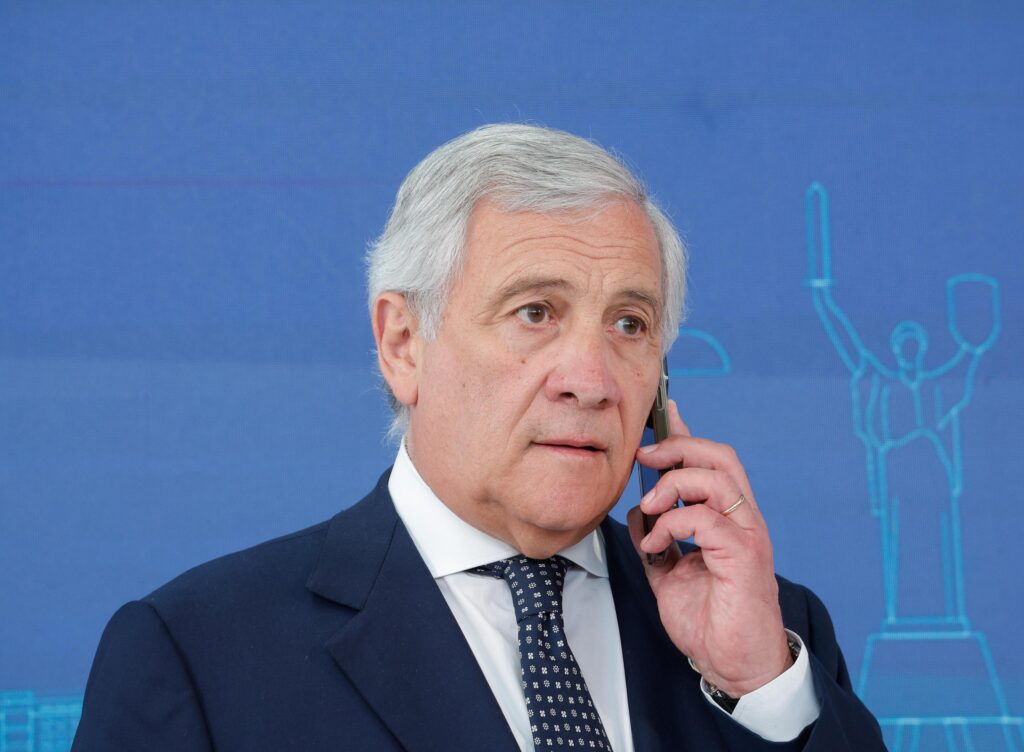
The point was made again forcefully this week by Emmanuele Orsini, head of Italy’s biggest industry association, Confindustria. And Italian Foreign Minister Antonio Tajani went so far as to call for the return of the ECB’s controversial bond-buying program, known as quantitative easing, which was used for over a decade to juice the eurozone economy until inflation began to surge.
The comments underscored deepening divisions within the EU over how aggressively the ECB should respond to the tariff threat. Much hinges on whether the risk to growth outweighs the risk of inflation returning.
Two-way risks
It could go either way. Retaliatory tariffs on U.S. imports would push consumer prices higher just as central bankers are declaring victory over inflation after it returned to the ECB’s 2 percent target in June.
Growth, meanwhile, could suffer if Chinese goods are rerouted from the U.S. to Europe. Chinese imports have already ticked up in the first half of 2025, said AXA Group Chief Economist Gilles Moëc in a note.
One major worry, said David Oneglia, an analyst at TS Lombard, is that Trump’s reaction will galvanize an equally forceful response from the EU. In his view, the bloc is now more likely to retaliate and might even levy taxes on U.S. tech services, striking at one of the most sensitive U.S. sectors.
“The EU cannot politically accept ‘terms of surrender’ so some kind of ‘escalation to de-escalate’ must be considered a fatter risk,” he said.
But he also pointed to the generally muted market reaction to last week’s news as a sign that investors, like policymakers, have given up trying to guess whether Trump will chicken out or double down.
“The reason for markets reacting how they are — i.e., not massively — and the difficulty to come up with any meaningful forecast on the basis of this latest move is that there are no ‘facts’ here, just more threats,” he said. “And markets and forecasts need data.”