

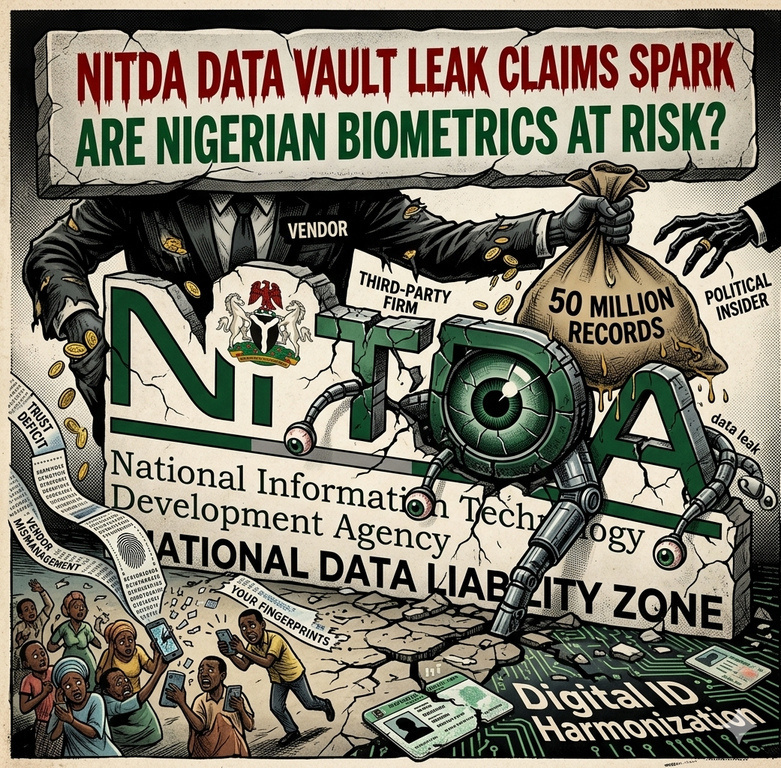
A wave of panic and anger is sweeping across Nigeria and at the center of the storm is the data leak associated with the Digital ID Harmonization project, led by the National Information Technology Development Agency (NITDA) in coordination with national digital infrastructure stakeholders.
The accusation is stark: “Your fingerprints are for sale.”
Critics claim a supposed breach of the “National Data Vault” has exposed sensitive biometric data of millions of Nigerians.
But is this a confirmed data leak — or a growing clash over how Nigeria manages digital identity?
The Allegation: “A Digital Ticking Time Bomb”
Privacy advocates and tech critics allege that:
- Millions of biometric records may have been exposed
- A third-party private tech firm was involved in data management
- The firm reportedly has connections to politically exposed individuals
- Sensitive citizen data could be vulnerable to misuse
The most alarming claim suggests up to 50 million Nigerians’ biometric data may have been affected — a figure that has fueled viral outrage online.
Critics are calling it a “digital ticking time bomb.”
Why the Outsourcing Claim Sparked Suspicion
Much of the backlash focuses on the decision to involve a private technology company in managing components of the national digital identity infrastructure.
Critics argue that outsourcing:
- Weakens state control over sensitive data
- Expands access points for cyber vulnerabilities
- Raises questions about transparency in vendor selection
To them, the issue is not just technical — it is structural.
They argue the state is handing over the most sensitive category of citizen data to private interests.
NITDA’s Position: “No Confirmed Leak, Strong Safeguards Exist”
The National Information Technology Development Agency (NITDA) and associated stakeholders reject the characterization of a “massive leak.”
Officials insist that:
- Nigeria’s data governance framework includes encryption and security layers
- Access to biometric data is strictly regulated
- Any vendor involved operates under contractual and legal oversight
- No verified breach of the national database has been established
They argue that public concern is being driven more by misinformation and speculation than verified technical evidence.
Understanding the Digital ID Project
The Digital ID Harmonization initiative is part of Nigeria’s broader effort to:
- Integrate fragmented identity systems
- Improve access to public services
- Strengthen financial inclusion
- Enhance national planning and security systems
In theory, a unified digital identity system reduces duplication and improves efficiency. But it also concentrates sensitive data — which raises legitimate cybersecurity concerns if not properly managed.
The Real Concern: Data Centralization Risk
Even without a confirmed breach, experts acknowledge a general truth: Centralized biometric databases carry high risk if not properly secured.
Potential vulnerabilities include:
- Insider threats
- Vendor mismanagement
- Cyberattacks targeting centralized systems
- Weak oversight of third-party access
This is why digital identity systems worldwide are often subject to intense scrutiny.
Why the “Political Insider” Angle Amplified the Story
The controversy intensified after claims that the private firm managing parts of the system has links to politically connected individuals.
That allegation — whether proven or not — has fueled suspicion about:
- Procurement transparency
- Vendor selection processes
- Possible conflicts of interest
In digital governance, perception of favoritism can be as damaging as technical failure.
Privacy Advocates: “This Is About Trust, Not Just Technology”
Privacy groups argue the core issue is trust. They say citizens must be confident that:
- Their biometric data cannot be misused
- Access is tightly controlled
- Oversight mechanisms are independent and strong
Without that, they warn, even well-designed systems can become “digital liability zones.”
The Government’s Counter-Argument
Officials argue that digital transformation inevitably requires partnerships with the private sector.
They say:
- Governments cannot build all digital infrastructure alone
- Private firms often provide advanced cybersecurity expertise
- Strict regulatory frameworks govern data access
From this perspective, outsourcing is not a weakness — it is modernization.
Fear vs Fact in the Digital Age
Part of the controversy reflects a broader challenge:
In high-tech governance, fear spreads faster than verification. Terms like:
- “data leak”
- “biometric exposure”
- “digital vault breach”
are powerful — even when not confirmed. That is why official clarification becomes critical in such situations.
Conclusion: Security Breach or Trust Deficit?
The claim of a massive NITDA “data vault leak” has sparked one of the strongest digital privacy debates in recent memory.
Critics warn of systemic risks and possible misuse of sensitive data. NITDA maintains that no verified breach has occurred and that safeguards remain in place. At the center of it all is a deeper issue:
Not just whether Nigeria’s digital identity system is secure — but whether citizens trust it enough to believe it is.