
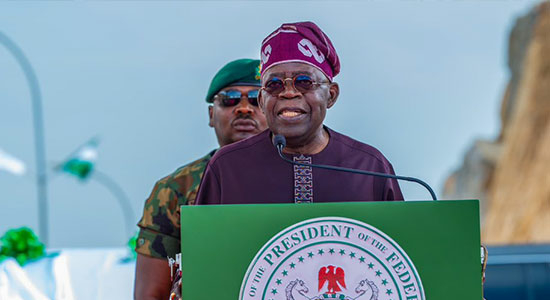
President Bola Ahmed Tinubu unveiled a recalibrated foreign policy framework designed to place Nigeria’s national interest and citizens at the heart of international engagement.
Speaking at the induction of newly appointed ambassadors and high commissioners, Tinubu said the new approach reflects changing global realities and Nigeria’s development priorities.
Stakeholders say the policy direction signals a stronger alignment between diplomacy, economic growth and citizen-focused outcomes.
Tinubu Reorders Foreign Policy Around National Interest
A major highlight of the announcement was the reordering of Nigeria’s 4D foreign policy doctrine from Democracy, Development, Demography and Diaspora to Demography, Development, Diaspora and Democracy, placing people and development outcomes at the forefront.
Supporters say the shift reinforces focus on:
- Citizen-centered diplomacy
- Protection and promotion of national interest
- Development-led foreign engagement
- More outcome-driven diplomatic priorities
Observers say the repositioning reflects a more strategic and pragmatic foreign policy outlook.
Economic Diplomacy Gains Greater Prominence
Stakeholders say the Nigeria-centred foreign policy framework also places stronger emphasis on diplomacy as a tool for economic growth and investment attraction.
Supporters say this could strengthen:
- Foreign direct investment attraction
- Trade and economic partnerships
- Technology and innovation collaboration
- Diplomacy linked to economic opportunity
Analysts say the move aligns with global trends where foreign policy increasingly supports economic competitiveness.
Diaspora Engagement Elevated in New Framework
Observers note the reordered doctrine also gives greater prominence to the Nigerian diaspora as a strategic asset in national development.
Supporters say this reinforces:
- Stronger diaspora participation in development
- Protection of Nigerians abroad
- Expanded global networks for national growth
- Diaspora-driven investment opportunities
Many see this as broadening the developmental role of foreign policy.
Diplomats Charged to Reposition Nigeria Globally
President Tinubu also urged envoys to project Nigeria more effectively abroad and adopt modern diplomacy tools, including digital engagement and strategic communication.
Supporters say this could support:
- Improved global perception of Nigeria
- Stronger diplomatic competitiveness
- Modernized external engagement strategies
- Better projection of Nigeria’s opportunities
Stakeholders say national image and economic diplomacy are increasingly interconnected.
Foreign Policy Shift Linked to Global Realities
Observers say the new Nigeria-centred approach is also a response to evolving geopolitical, economic and security realities shaping the international system.
Potential priorities highlighted include:
- More adaptive diplomatic strategy
- Stronger response to global uncertainty
- Strategic protection of Nigeria’s interests
- Greater relevance in changing global dynamics
Analysts say flexible diplomacy is becoming essential in a rapidly shifting world order.
Stakeholders See Move as Strategic Recalibration
Supporters say the announcement signals more than a rhetorical shift, but a strategic recalibration of how Nigeria engages the world.
Possible implications highlighted include:
- Stronger alignment of diplomacy with development
- More measurable outcomes from foreign missions
- Greater focus on citizen benefits in diplomacy
- Reinforced role for Nigeria in global affairs
Observers say the policy could shape a more results-driven diplomatic era.
Conclusion
As Tinubu recalibrates Nigeria’s foreign policy, the shift reinforces a stronger focus on national interest, economic diplomacy and people-centered global engagement.
With the reordered 4D doctrine placing citizens and development at the center, stakeholders say the approach could help position Nigeria’s foreign policy as more strategic, responsive and beneficial to national progress.